How to Unclog a Toilet (Without a Plunger If You Have To)
Step-by-step methods to unclog any toilet — from the standard plunger technique to dish soap, hot water, and a drain snake. Fixes 95% of clogs without a plumber.
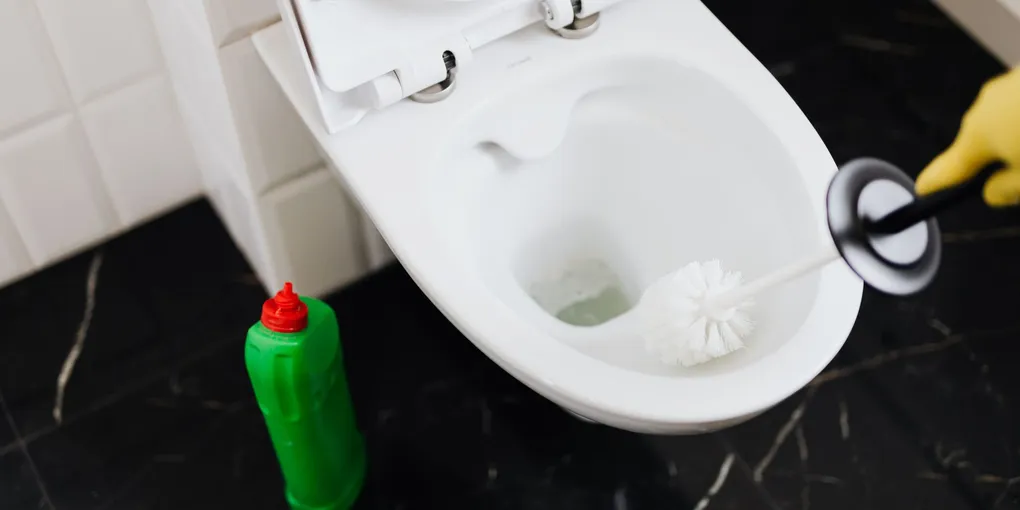
To unclog a toilet, first stop the water by closing the shutoff valve behind the toilet. Use a flange plunger (not a cup plunger) — the one with an extra rubber flap that seals the drain. Plunge with firm vertical strokes for 15-20 seconds. If that fails, pour a cup of dish soap and a bucket of hot (not boiling) water from waist height. For stubborn clogs, use a toilet auger (not a regular drain snake). 95 percent of clogs clear in under 10 minutes.
Frequently Asked Questions
What is the fastest way to unclog a toilet?
A flange plunger used correctly clears most clogs in under 60 seconds. Ensure the plunger fully seals the drain opening, then use firm vertical strokes — not hard slams — for 15-20 seconds. The seal matters more than force.
Will dish soap unclog a toilet?
Yes, for soft clogs. Pour about a cup of dish soap into the bowl, then add a bucket of hot tap water (not boiling — boiling can crack the porcelain). Wait 15-20 minutes. The soap lubricates the clog and the water pressure usually pushes it through.
Can I use a regular drain snake on a toilet?
No. A standard drain snake will scratch the porcelain. Use a toilet auger (also called a closet auger) — it has a protective rubber sleeve that protects the bowl. Toilet augers cost 15-30 dollars at any hardware store.
Why does my toilet keep clogging?
Repeated clogs usually mean one of three things: too much toilet paper being flushed, items that shouldn't be flushed (wipes, tampons, dental floss), or a blockage further down the line (tree roots, old cast iron pipes). Low-flow toilets also clog more easily than older high-volume toilets.
When should I call a plumber for a clogged toilet?
Call a plumber if the clog won't clear after a toilet auger attempt, if multiple drains are backing up (indicates a main line clog), if water is coming up through tub or shower drains, or if you suspect something valuable (jewelry, phone) fell in that you don't want to flush through.
To unclog a toilet, first stop the water by closing the shutoff valve behind the toilet. Use a flange plunger (not a cup plunger) — the one with an extra rubber flap that seals the drain.
A clogged toilet is the most common household plumbing emergency — and almost always a 10-minute DIY fix. The key is using the right method for the right clog. A plunger handles the vast majority of clogs. For the rest, a toilet auger will clear them. A plumber should be the last resort.
This guide covers six methods in order of what to try first, plus what absolutely not to do.
First: Stop the Bowl From Overflowing
If the water level is rising toward the rim, act fast.
Option 1: Close the shutoff valve. It’s on the wall behind the toilet, usually on the left side. Turn clockwise until it stops. This cuts water supply to the tank.
Option 2: Open the tank and hold the flapper closed. Remove the tank lid, reach in, and press down on the rubber flap at the bottom. This stops water from entering the bowl.
Option 3: Let it settle. If you’re sure the clog isn’t severe, most toilets will absorb excess water within 60-90 seconds. Don’t flush again.
Never flush a clogged toilet a second time hoping it will “push through.” It won’t. It will overflow onto your bathroom floor.
Method 1: Flange Plunger (Clears 80% of Clogs)
The plunger is your first tool. But not just any plunger.
Cup plunger vs flange plunger:
- Cup plunger (flat bottom, red rubber cup) is designed for sinks and tubs. It doesn’t seal a toilet drain well.
- Flange plunger (ball-shaped, has an extra rubber flap that extends from the cup) is designed for toilets. The flap drops into the drain opening and creates a tight seal.
Every home needs a flange plunger. They cost $8-15.
Technique:
- Put on gloves. This is going to get wet.
- Ensure there’s enough water in the bowl to cover the plunger cup. If the bowl is dry, add water from a bucket until the cup can be submerged. Plunging without water is just moving air.
- Lower the plunger into the bowl at an angle to push out air trapped inside the cup. A plunger full of air won’t seal.
- Seat the plunger firmly over the drain opening. The flange should be inside the drain hole.
- Plunge with firm, vertical strokes. Push down firmly, then pull up firmly. Keep the seal on every stroke.
- Do 15-20 strokes. Hard but controlled — not wild slamming.
- On the last stroke, pull the plunger up quickly to break the seal.
- The clog should clear. The water should rush down. Flush once to confirm it drains normally.
What went wrong if plunging didn’t work:
- Cup plunger instead of flange plunger (swap it out)
- Not enough water in the bowl (add more)
- Plunger not sealing (try a different angle)
- Air in the plunger cup (squeeze it out before seating)
- Clog is too solid or too deep (move to Method 3 or 4)
Method 2: Dish Soap and Hot Water
If you don’t have a plunger — or the clog is soft (toilet paper, waste) — this usually works.
- Pour about a cup of liquid dish soap into the bowl. Dawn works well because it’s concentrated. Aim for the drain hole.
- Heat half a gallon of water to hot-tap temperature. Do not use boiling water. Boiling water can crack the porcelain or warp wax ring seals under the toilet.
- Pour the hot water into the bowl from waist height. The height adds force; the hot water softens the clog; the soap lubricates.
- Wait 15-20 minutes for the combination to work.
- Flush once. If the water goes down at normal speed, the clog is cleared.
This method is effective on soft organic clogs. It won’t work on toys, tampons, or other solid objects.
Method 3: Toilet Auger (Clears 95% of Remaining Clogs)
If plunging and soap haven’t worked, it’s time to physically break through the clog.
Critical: Use a toilet auger ($15-30), not a standard drain snake. A toilet auger (also called a closet auger) has a protective rubber sleeve around the shaft that prevents scratching the porcelain. A regular snake will leave permanent scratches in the bowl.
Technique:
- Insert the auger head into the drain opening, positioned at the bottom of the bowl.
- Crank the handle clockwise slowly while pushing the cable forward. You’ll feel it snake through the trap.
- When you hit resistance, keep cranking with gentle forward pressure. You’re either breaking up the clog or hooking onto it.
- Once you feel the cable move freely past the resistance, crank in reverse to pull the clog back (or push it through).
- Retract the cable.
- Flush and confirm normal drainage.
Toilet augers are one of those tools you don’t think you need until you really need one. Every homeowner should have one.
Method 4: Enzyme Drain Cleaner (For Slow Drains, Not Full Clogs)
Enzyme cleaners digest organic matter over time. They work well for slow-draining toilets that haven’t fully clogged.
- Pour a cup of enzyme cleaner into the bowl at bedtime.
- Let it sit overnight.
- Flush in the morning.
Enzyme cleaners are safe for pipes and septic systems. They’re the only drain cleaners you should use in a toilet. Never use chemical drain cleaners like Drano or Liquid-Plumr in a toilet — they can damage the porcelain, corrode the wax ring, and create dangerous fumes if they don’t clear the clog.
Method 5: Wet/Dry Vacuum (For Objects You Dropped In)
If something solid fell in (phone, kid’s toy, toothbrush) and you want to retrieve it — not just flush it through — use a wet/dry vacuum.
- Empty the vacuum canister.
- Remove the filter (critical — a regular filter will get soaked).
- Wrap a towel around the hose end to create a seal against the drain.
- Turn on the vacuum.
- It will suck water and (hopefully) the object into the canister.
- Retrieve the object.
This is also how professional plumbers handle “something fell in the toilet” calls.
Method 6: Remove the Toilet (Last DIY Option)
For clogs that nothing else clears, removing the toilet lets you access the drain from above. This is the last DIY option before calling a plumber.
- Turn off the water shutoff behind the toilet.
- Flush to empty the tank.
- Sponge out remaining water from tank and bowl.
- Disconnect the water supply line.
- Unscrew the two nuts at the base of the toilet.
- Lift the toilet straight up off the floor bolts.
- You now have direct access to the drain. Use a regular drain snake (no porcelain to scratch now) to clear the clog.
- Replace the wax ring ($3-8) before reinstalling — the old one is now compromised.
- Reset the toilet and reconnect water.
This is a significant project — see our guide on how to install a toilet for the full process.
What NOT to Do
Don’t use boiling water. It cracks porcelain. Use hot tap water instead.
Don’t use chemical drain cleaners. They damage the bowl, the wax ring, and can create toxic fumes. They rarely work on toilet clogs anyway because the clog is past the trap where liquid cleaners can’t concentrate.
Don’t flush repeatedly. Each flush adds water that can overflow the bowl. Flush once, then stop.
Don’t use a wire hanger. You’ll scratch the porcelain and probably not reach the clog.
Don’t use a standard drain snake. Use a toilet auger with a protective sleeve.
Don’t flush “flushable” wipes. They’re not actually flushable — they don’t break down like toilet paper and are the #1 cause of repeated clogs.
Preventing Future Clogs
Most toilet clogs are preventable:
What NOT to flush:
- Wipes (including “flushable” wipes)
- Feminine hygiene products
- Diapers
- Dental floss
- Hair
- Paper towels
- Cotton balls or Q-tips
- Cat litter
- Medications
- Cigarette butts
Toilet paper best practices:
- Use 1-ply or 2-ply, not ultra-thick quilted varieties
- Flush large wads in two flushes instead of one
- If you have a low-flow toilet that clogs frequently, keep a plunger handy and use less paper per flush
If your toilet clogs frequently: The toilet itself might be the problem. Low-flow toilets from 1994-2005 were notorious for weak flushes. Upgrading to a modern high-efficiency toilet ($150-400) with a better flushing mechanism often eliminates chronic clogs.
When to Call a Plumber
Call a licensed plumber when:
- Toilet auger didn’t clear the clog
- Multiple drains in the house are backing up (indicates a main line clog or sewer backup)
- Water comes up through the tub or shower when the toilet flushes
- You suspect tree roots in the line (common in homes with mature yards and clay pipes)
- Toilet is flushing but drains slowly every time (main line partial blockage)
- You smell sewage in the house
Typical plumber cost: $100-200 for a simple clear. $200-400 if they need to snake the main line. $500+ if there’s a broken pipe or root intrusion.
Related Reading
- Drain Cleaning Cost — when DIY fails and you need a plumber
- How to Fix a Running Toilet — fix the other most common toilet issue
- How to Install a Toilet — full replacement guide
- How to Unclog a Drain Without Chemicals — sink and shower clog methods
- How to Fix Low Water Pressure — related plumbing troubleshooting
- How to Clean a Toilet — deep clean including the jet holes that cause sluggish flushing
- First: Stop the Bowl From Overflowing
If the water level is rising toward the rim, act fast.
- Method 1: Flange Plunger (Clears 80% of Clogs)
The plunger is your first tool. But not just any plunger.
- Method 2: Dish Soap and Hot Water
If you don't have a plunger — or the clog is soft (toilet paper, waste) — this usually works.
- Method 3: Toilet Auger (Clears 95% of Remaining Clogs)
If plunging and soap haven't worked, it's time to physically break through the clog.
- Method 4: Enzyme Drain Cleaner (For Slow Drains, Not Full Clogs)
Enzyme cleaners digest organic matter over time. They work well for slow-draining toilets that haven't fully clogged.
- Method 5: Wet/Dry Vacuum (For Objects You Dropped In)
If something solid fell in (phone, kid's toy, toothbrush) and you want to retrieve it — not just flush it through — use a wet/dry vacuum.
Free: 10-Point Home Maintenance Checklist
Prevent costly repairs with this seasonal checklist. Save hundreds every year by catching problems early.
Your checklist is ready!
Open Checklist →Something went wrong. View the checklist here.