How to Tile a Bathroom Floor: DIY Step-by-Step Guide
Complete guide to laying bathroom floor tile — layout planning, cutting, thinset application, grouting, and sealing. Includes the layout mistake that ruins symmetry.
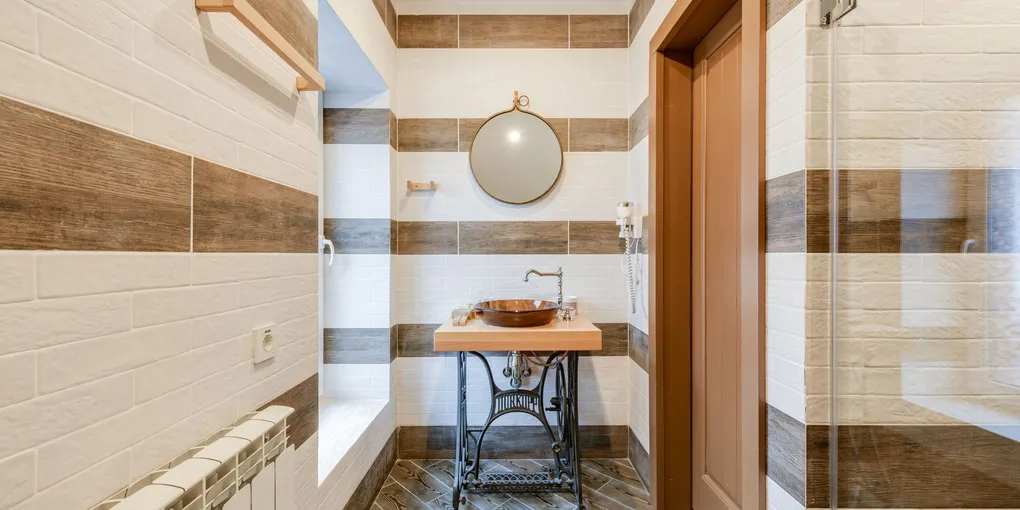
Tiling a bathroom floor: (1) Plan layout — find the center of the room, dry-lay tiles from center outward to verify cuts at the walls are balanced on both sides. (2) Apply thinset with a 3/16-inch V-notch trowel, work in 3-square-foot sections. (3) Set tile with tile spacers (typically 1/8-inch joints), pressing firmly and checking level with a rubber mallet. (4) Let thinset cure 24 hours before grouting. (5) Grout with a float at 45 degrees, wipe haze with a damp sponge. (6) Seal grout after 72 hours. A 40 sq ft bathroom floor takes a first-timer 1.5–2 days total. Do not skip the center-layout step — it prevents lopsided cuts at doorways and walls.
Frequently Asked Questions
How long does it take to tile a bathroom floor?
A standard 5x8 bathroom floor takes a first-timer 1.5–2 days of actual work: half a day for layout and dry-fit, half a day setting tile, and the next morning for grouting after the thinset cures (minimum 24 hours). Most of the time is waiting: 24 hours after setting tile before grouting, and 72 hours after grouting before walking on it normally.
Do I need to remove the toilet to tile a bathroom floor?
Yes. Remove the toilet before tiling — running tile under a toilet mounted on the old floor leaves a visible height difference and makes future toilet replacement more complicated. Turn off the water supply valve, flush to empty the tank, disconnect the supply line, remove the two mounting bolts at the floor, and lift the toilet off the flange. Cap the flange with a rag to block sewer gas while you work.
What size trowel should I use for bathroom floor tile?
For tiles up to 12x12 inches: a 3/16-inch V-notch trowel. For tiles 12x12 to 18x18: a 3/8-inch square-notch trowel. For larger format tiles (18x18+): a 1/2-inch square-notch. The trowel notch size determines how much thinset is applied — too little and tiles don't bond, too much and adhesive squeezes into the grout joints.
What's the difference between thinset and mastic adhesive?
Thinset mortar (cement-based) is required for wet areas like bathroom floors and showers. Mastic (organic adhesive) is not moisture-resistant and should never be used on a bathroom floor or shower — it fails when wet, and a bathroom floor gets wet regularly. Use thinset. Modified thinset (polymer-modified) is more flexible and bonds better than unmodified thinset for most DIY applications.
How do you cut bathroom floor tile?
For straight cuts: a wet saw (tile saw) makes clean, accurate cuts and is essential for any significant tile project. Rent one from Home Depot for $50-75/day. For occasional straight cuts on porcelain or ceramic: a snap cutter works for tiles up to about 12 inches. For curved cuts around toilet flanges and door frames: a tile nipper or angle grinder with a diamond blade. You cannot make curved cuts with a wet saw.
How soon can I walk on new tile after grouting?
Light foot traffic after 24 hours, though 48-72 hours is safer for full use. Wait 72 hours before placing furniture. Wait at least 72 hours (some grout manufacturers say 7 days) before sealing sanded grout. Do not clean grout haze with water before the minimum 24-hour cure — water softens uncured grout.
Tile a bathroom floor by spreading thinset mortar with a notched trowel, setting tiles with 1/8-inch spacers, and grouting after 24 hours — budget $3–$12 per sq ft for materials and 1–2 days for a typical 50–80 sq ft bathroom floor. Start from the center of the room and work outward. Use a wet tile saw for cuts (rent for $50–$80/day). Seal grout within 72 hours of application to prevent staining.
Tiling a bathroom floor is a weekend project with a 2-day minimum (thinset needs 24 hours to cure before grouting). The most common DIY mistakes are preventable: wrong layout planning, insufficient thinset coverage, and grouting before the thinset cures. Get those right and the job comes out professional.
What You Need
Materials:
- Ceramic or porcelain tile (buy 10-15% more than your measured square footage for cuts and waste)
- Thinset mortar (polymer-modified)
- Grout (sanded for joints over 1/8 inch; unsanded for 1/16 inch joints)
- Grout sealer
- Tile spacers (match your desired joint width: 1/16”, 1/8”, 3/16”)
- Backer board + screws (if subfloor is wood — skip if existing cement board is solid)
Tools:
- Wet saw (rent or buy)
- Notched trowel (size depends on tile — see FAQ)
- Rubber mallet
- Tile spacers
- Level and chalk line
- Bucket + grout float
- Sponge and bucket for cleanup
- Knee pads
- Tape measure, pencil, carpenter’s square
Amazon picks:
- QEP 24-inch manual tile cutter — for straight cuts on smaller tiles (rent a wet saw for anything larger)
- Custom Building Products VersaBond thinset — reliable polymer-modified thinset
- Laticrete Permacolor grout — premixed, color-consistent sanded grout
- Tile spacers 1/8 inch — standard gap for most floor tile
- Grout float — essential for spreading grout diagonally into joints
- Notched trowel 3/8 inch — for 12x12 tiles
- Tile leveling system — prevents lippage (uneven tile edges)
- Aqua-Mix sealer — penetrating grout sealer for bathroom floors
Step 1: Remove Toilet and Prep the Subfloor
Turn off water supply, flush, disconnect, remove toilet. Cap the flange with a rag.
Check the existing floor. It must be:
- Solid — no flex, bounce, or soft spots. Flex cracks tile.
- Level — use a 4-foot level. Variation over 3/16 inch per 10 feet needs to be addressed with self-leveling compound.
- Clean — sweep and vacuum. Old adhesive and grease contaminate thinset.
For wood subfloors: install 1/4-inch cement backer board over the plywood, screwed every 6-8 inches, seams taped with fiberglass mesh tape. This is not optional — wood expands and contracts, cracking tile without the cement buffer.
Step 2: Plan the Layout
This step determines whether the finished floor looks professional or amateurish. The goal: avoid tiny slivers of tile at the walls and keep the pattern visually balanced.
Find the center:
- Snap chalk lines from the midpoint of each pair of opposite walls — two perpendicular chalk lines crossing in the center of the room.
- Do a dry-fit (no thinset) from the center toward the walls in each direction.
- Count the tiles. If you’d end with a sliver (less than half a tile) at any wall, shift the starting point by half a tile in that direction.
- The goal: equal-sized cuts at opposite walls, preferably half a tile or larger.
The toilet flange and doorway are the most visible spots — try to avoid cuts smaller than 1/3 tile near them.
Step 3: Mix the Thinset
Mix thinset to a peanut-butter consistency — it holds a ridge from the trowel without slumping, and a clump pressed to the tile sticks without sliding. Too wet and it won’t support the tile; too dry and it won’t bond.
Mix only what you can use in 20-30 minutes. Thinset that has started to skin over (feels tacky to the touch) must be discarded — using it causes bond failure.
Step 4: Set the Tile
Start at the center intersection and work toward the walls.
Apply thinset:
- Spread thinset on the floor with the flat side of the trowel to get coverage
- Comb the thinset with the notched side at a consistent 45-degree angle — ridges should be uniform
- Work in 2-3 square-foot sections (don’t spread more than you can cover before it skins)
Place tile:
- Press the tile firmly into the thinset with a slight twisting motion to collapse the ridges
- Set each tile to the chalk line — use your layout lines as guides, not your eye
- Place spacers at each corner
- Use a rubber mallet and beating block (a scrap of wood) to tap each tile level to adjacent tiles
- Check with a level frequently — lippage (one tile edge higher than adjacent tile) is the most noticeable flaw
Check bond: Periodically lift a tile you’ve just set and look at the back. You need 95% coverage for wet areas (bathroom floors). If you see dry ridges with no thinset transfer, spread thinset on the back of the tile (back-buttering) in addition to the floor.
Step 5: Make Cuts
For the tiles at walls, doorways, and around the toilet flange, measure and cut to fit.
Straight cuts: Mark the cut line with a marker. Use a wet saw or snap cutter.
Around the toilet flange: Make a paper template of the curve by folding the paper to the flange and cutting to shape. Transfer to the tile, then cut with a tile nipper or angle grinder + diamond blade.
Around door frames: Undercut the door casing (use a hand saw flat on a tile as a guide) so tile slides under the casing — this looks more professional than cutting tile to fit around the casing profile.
Let the thinset cure 24 hours before grouting. Do not walk on the tile during this time.
Step 6: Apply Grout
Remove all tile spacers before grouting.
Mix sanded grout to a thick peanut-butter consistency. Let it “slake” (rest) 5-10 minutes after mixing, then stir again.
Grouting process:
- Apply grout diagonally to the tile surface with a rubber grout float
- Push grout into the joints at a 45-degree angle — going straight across the joints pulls grout out
- Work in 4-6 square-foot sections
- Scrape excess grout off the tile face with the float held nearly vertical
- Wait 15-30 minutes, then clean haze with a damp (not soaking wet) sponge — wring it thoroughly
- Rinse the sponge frequently. Work in circular motion, then straight strokes to clean joints
- Let haze dry, then buff with a dry cloth
Don’t rush the cleanup. Wiping too wet pushes grout out of the joints and changes the grout line color by diluting it unevenly.
Step 7: Seal the Grout
Grout (cement-based and porous) absorbs water, soap, and stains. Seal it.
Apply penetrating grout sealer with an applicator brush or bottle along each grout line after the grout has cured 72 hours to 7 days (follow manufacturer’s spec). Wipe excess off the tile immediately. Let cure per manufacturer’s instructions before regular use.
Reseal annually in high-traffic bathroom floors.
Step 8: Reinstall the Toilet
New wax ring (never reuse the old one), new mounting bolts if the old ones are corroded, reconnect supply line. See How to Install a Toilet for the full reinstallation process.
Cost Breakdown: DIY vs. Pro
| DIY | Professional | |
|---|---|---|
| Materials (100 sq ft) | $200-400 | Included |
| Tool rental (wet saw) | $75/day | Included |
| Labor | Your time | $800-1,500 |
| Total | $275-475 | $1,000-2,000 |
A standard 5x8 bathroom floor (40 sq ft) typically costs $150-250 in materials DIY vs. $600-1,200 installed by a tile contractor.
Full cost breakdown: Tile Flooring Installation Cost
Related Reading
- Tile Flooring Installation Cost — professional installation costs per square foot
- How to Clean Grout — keeping it clean after installation
- How to Deep Clean a Bathroom — full bathroom cleaning routine
- Bathroom Remodel Cost Breakdown — if you’re doing more than just the floor
- How to Install a Toilet — reinstalling after tiling
- How to Fix a Floor Tile That Is Loose — fix tiles that shift or clunk underfoot
- How to Install Tile Backsplash — same skills applied to the kitchen
- Remove Toilet and Prep the Subfloor
Turn off water supply, flush, disconnect, remove toilet. Cap the flange with a rag.
- Plan the Layout
This step determines whether the finished floor looks professional or amateurish. The goal: avoid tiny slivers of tile at the walls and keep the pattern visually balanced.
- Mix the Thinset
Mix thinset to a peanut-butter consistency — it holds a ridge from the trowel without slumping, and a clump pressed to the tile sticks without sliding. Too wet and it won't support the tile; too dry and it won't bond.
- Set the Tile
Start at the center intersection and work toward the walls.
- Make Cuts
For the tiles at walls, doorways, and around the toilet flange, measure and cut to fit.
- Apply Grout
Remove all tile spacers before grouting.
Free: 10-Point Home Maintenance Checklist
Prevent costly repairs with this seasonal checklist. Save hundreds every year by catching problems early.
Your checklist is ready!
Open Checklist →Something went wrong. View the checklist here.