How to Paint the Exterior of a House (Step-by-Step Guide, 2026)
Exterior house painting done right: prep the surface, prime bare wood, choose the right exterior paint, and apply two coats for a finish that lasts 8-12 years. Avoid the mistakes that cause peeling in year two.
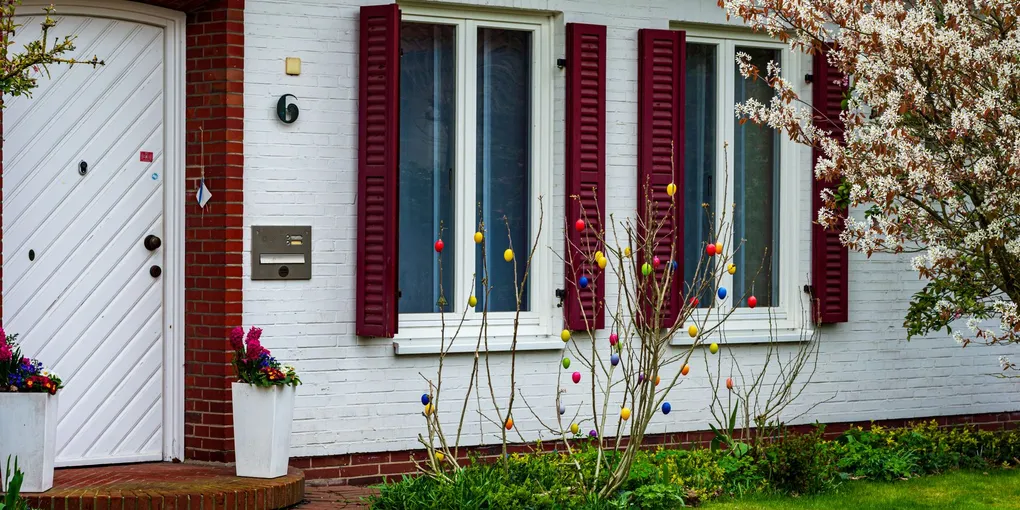
Prep is 70% of an exterior paint job. Power wash, scrape loose paint, sand smooth, caulk all gaps, spot-prime bare wood — then apply primer to any raw surface, followed by two coats of 100% acrylic exterior paint. Skipping prep is why most DIY exterior paint jobs fail within 2–3 years instead of lasting 8–12.
Frequently Asked Questions
How long does it take to paint a house exterior yourself?
A 1,500–2,000 sq ft single-story house takes 4–6 days of work for one person: 1–2 days of washing, scraping, sanding, and caulking; 1 day of priming; 2 days applying two coats of finish paint. Add days for drying time between coats (minimum 4 hours, ideally 24 hours in humid conditions). Two-story homes add significant time for ladder/scaffold setup.
What is the best exterior paint for a house?
100% acrylic latex exterior paint is the standard for all siding types. It expands and contracts with temperature changes (unlike oil-based paint), resists mildew, and cleans up with water. For trim: a slightly higher sheen (satin or semi-gloss) resists dirt and moisture better than flat. Top brands: Sherwin-Williams Emerald Exterior, Benjamin Moore Aura Exterior, Behr Marquee Exterior — all are top-quality. Budget brands perform, but may not last as long.
Do I need to prime before painting house exterior?
Prime any bare wood (scrapes, repairs, new wood, unpainted surfaces). Prime over stains, water damage marks, and tannin-bleed from cedar or redwood. You can skip primer over sound existing paint that's properly prepared — but if more than 30% of the surface has bare wood, priming the whole house makes more sense than spot-priming.
Can I paint over peeling exterior paint?
No. Peeling paint must be removed — scrape, sand, and prime before applying new paint. Painting over loose paint just buries the failure and the new paint will peel too, usually faster. If the peeling is extensive (more than 30% of a surface), stripping and re-priming the entire surface is the right call.
What temperature should it be to paint house exterior?
Paint manufacturer minimum: 50°F (10°C). Better range: 60°F–90°F. Avoid painting in direct midday sun on hot days (70°F+ in shade is fine — 90°F on a surface in full sun causes paint to dry too fast). Avoid painting when rain is forecast within 24 hours, or when dew point is within 5°F of air temperature (high humidity prevents proper curing). Early morning painting works well in summer — cooler surface, drying done before afternoon heat.
Do I need a pressure washer to prep exterior paint?
A pressure washer is the most efficient way to clean the surface before painting, but a garden hose with a high-pressure nozzle works for light cleaning. For homes with mildew, heavy dirt, or chalky old paint, a 1,600–2,500 PSI pressure washer is a significant time saver — rent one for $50–$80/day if you don't own one. Never skip washing — painting over dirt is a leading cause of adhesion failure.
Prep is 70% of an exterior paint job. Power wash, scrape loose paint, sand smooth, caulk all gaps, spot-prime bare wood — then apply primer to any raw surface, followed by two coats of 100% acrylic exterior paint.
A fresh exterior paint job is one of the best returns-on-investment in home improvement — and one of the most common DIY disasters when homeowners skip prep. Here’s the full process.
What you need
Prep tools:
- Pressure washer — 1,600–2,500 PSI (or rent one for $50–$80/day)
- Paint scraper — wide blade and detail
- Exterior caulk — 100% silicone or urethane
- Random orbital sander + 80-grit paper for smoothing edges
- Stiff-bristle brush (for mildew wash)
Paint tools:
- 4-inch synthetic brush for cut-in, corners, and trim
- 9-inch roller with 3/4-inch nap for flat siding sections
- Roller frame and extension pole — 4–8 foot extension reaches most single-story walls from ground
- Pump sprayer (optional — faster for flat siding, requires more masking)
- Drop cloths to protect foundation plantings and concrete
Paint:
- 100% acrylic latex exterior paint — figure 350–400 sq ft per gallon
- Exterior primer for bare wood areas — same coverage rate
- Estimate: A 2,000 sq ft home has roughly 1,400–1,800 sq ft of wall surface. At 2 coats: 8–10 gallons of paint, 2–3 gallons of primer. Add 10% waste.
Day 1: Pressure wash and mildew treatment
Before any scraping or caulking, wash the entire exterior.
-
Mix a mildew-kill wash: 1 part bleach to 4 parts water, or use a pre-mixed deck and fence cleaner. Brush this on any mildew stains (black or gray fuzzy growth) and let sit 10–15 minutes before washing off.
-
Pressure wash at 1,200–2,000 PSI with a 25-degree or 40-degree tip. Work from top to bottom. Don’t hold the tip within 6 inches of the siding — this can delaminate wood fiber or force water behind siding.
-
Allow 24–48 hours to dry completely before painting. Moisture trapped under new paint causes immediate adhesion failure.
Critical: Don’t pressure wash right before you paint. The wall must be dry.
Day 2: Scrape, sand, and repair
With the wall clean and dry, you can now see every problem area clearly.
Scraping loose paint: Use a sharp paint scraper — dull scrapers tear wood fiber. Scrape until you hit sound paint or bare wood. You’re not trying to remove all the old paint — just everything that’s loose, cracked, or flaking.
Feather the edges: Where you’ve scraped down to a lower paint layer, sand the edge smooth with 80-grit. New paint over an abrupt edge will show as a ridge and eventually peel from that edge. Feathering (sanding the edge at an angle) eliminates the ridge.
Fill holes and gaps:
- Nail holes and small gouges: exterior wood filler / spackling. Sand flush when dry.
- Rot: cut out fully rotted sections and use a two-part epoxy wood filler for repairs. This is not a structural fix — if structural members are rotted, replace them.
- Caulk all joints: where trim meets siding, where window/door frames meet siding, where siding meets foundation. Use paintable exterior caulk. Don’t caulk the bottom edge of horizontal lap siding — this traps moisture.
Day 2–3: Prime
Prime all bare wood. Don’t skip this step — bare wood absorbs paint unevenly and the top coat will show grain raise and blotchiness.
Where to prime:
- Any bare wood from scraping
- New wood repairs
- Stains (water damage, tannin bleed from cedar/redwood, rust from nails)
- Galvanized metal (use a bonding primer)
Tannin bleed: Cedar and redwood release tannins that bleed through regular primer. Use a shellac-based primer (Zinsser BIN) or a specific tannin-blocking exterior primer on these species.
Allow primer to dry completely before top coat — typically 4 hours minimum, 24 hours preferred.
Day 3–5: Apply two coats of finish paint
Sequence: Always paint top-to-bottom. Work from gable peaks down to the foundation. This way any drips from upper sections fall on unpainted surface and get covered as you work down.
Cut in first, then roll:
- Use a 4-inch angled sash brush to paint a 3–4 inch strip along all edges: soffits, window frames, door frames, corners, trim.
- While the cut-in is still wet, roll the main field. Wet-on-wet gives a seamless finish — if the cut-in dries before you roll, the brush marks become visible.
Roller technique:
- Load the roller fully. Roll in a zigzag W-pattern, then smooth out with vertical strokes.
- Maintain a wet edge — don’t let one section dry before you work the adjacent section.
- For lap siding, work one board at a time, painting end to end before moving to the next.
Coat 2: Apply the second coat after the first has dried per the manufacturer’s instructions (typically 4 hours, longer in high humidity). Two coats of good-quality paint will outlast three coats of cheap paint.
Common mistakes and how to avoid them
| Mistake | Result | Fix |
|---|---|---|
| Painting over loose paint | Peels in 1–2 years | Always scrape completely first |
| Skipping mildew kill | New paint peels or grows mold | Bleach wash before painting |
| Painting in high humidity | Blistering, poor adhesion | Wait for dew point below 55°F |
| Not priming bare wood | Uneven finish, grain shows | Always prime bare wood |
| One heavy coat instead of two thin | Runs, slow dry, poor adhesion | Two coats at recommended coverage |
| Caulking bottom edge of lap siding | Trapped moisture, rot | Leave bottom edge open |
DIY vs. hiring a painter
| Factor | DIY | Pro |
|---|---|---|
| Cost (materials only) | $400–$1,200 | $3,000–$8,500 total |
| Time | 4–6 days | 2–4 days |
| Scaffolding for 2-story | Rental required ($200–$400) | Included |
| Quality control | Variable | Consistent if reputable |
| Warranty | None | 2–5 year labor warranty typical |
DIY makes sense for single-story homes, if you have time, and if the prep work isn’t too extensive. Two-story homes are significantly harder due to ladder work and scaffolding — the value of hiring a pro increases substantially.
Related guides
- Exterior House Paint Cost — what pros charge and how to evaluate bids
- How to Power Wash Your House — prep step in detail
- How to Repair a Deck — if you’re also painting/staining the deck
- Annual Home Maintenance Schedule — when to repaint as part of the yearly cycle
- Handyman Cost Guide — for repairs before painting
- Pressure wash and treat mildew
Mix a mildew-kill wash (1 part bleach to 4 parts water) and scrub any mildew stains. Pressure wash the entire exterior at 1,200–2,000 PSI from top to bottom using a 25 or 40-degree tip. Allow 24–48 hours to dry completely before painting — moisture trapped under new paint causes adhesion failure.
- Scrape, sand, fill, and caulk
Scrape all loose, cracked, or flaking paint with a sharp scraper. Feather the scraped edges with 80-grit sandpaper to eliminate ridges. Fill nail holes and gouges with exterior wood filler; let dry and sand flush. Caulk all joints where trim meets siding, around window and door frames, and where siding meets the foundation. Do not caulk the bottom edge of horizontal lap siding — this traps moisture.
- Prime all bare wood and problem areas
Prime any bare wood from scraping, new repairs, water stains, and tannin bleed areas (cedar and redwood need shellac-based primer like Zinsser BIN). Allow primer to dry completely — minimum 4 hours, preferably 24 hours before applying finish paint.
- Apply two coats of exterior finish paint
Work top-to-bottom across the house — gable peaks down to foundation. Cut in a 3–4 inch strip along all edges with a 4-inch angled sash brush first, then immediately roll the main field while cut-in is still wet. Roll in a zigzag W-pattern then smooth with vertical strokes. Maintain a wet edge. Apply the second coat after the first dries per the can label (typically 4 hours, longer in humid conditions).
Free: 10-Point Home Maintenance Checklist
Prevent costly repairs with this seasonal checklist. Save hundreds every year by catching problems early.
Your checklist is ready!
Open Checklist →Something went wrong. View the checklist here.