How to Fix a Loose Stair Railing: Tightening Balusters, Newel Posts, and Wall-Mounted Rails (2026)
A loose stair railing is a safety hazard. This guide covers diagnosing whether the newel post, balusters, or wall-mounted rail bracket is the loose point, and the repair methods for each — from lag screws to epoxy.
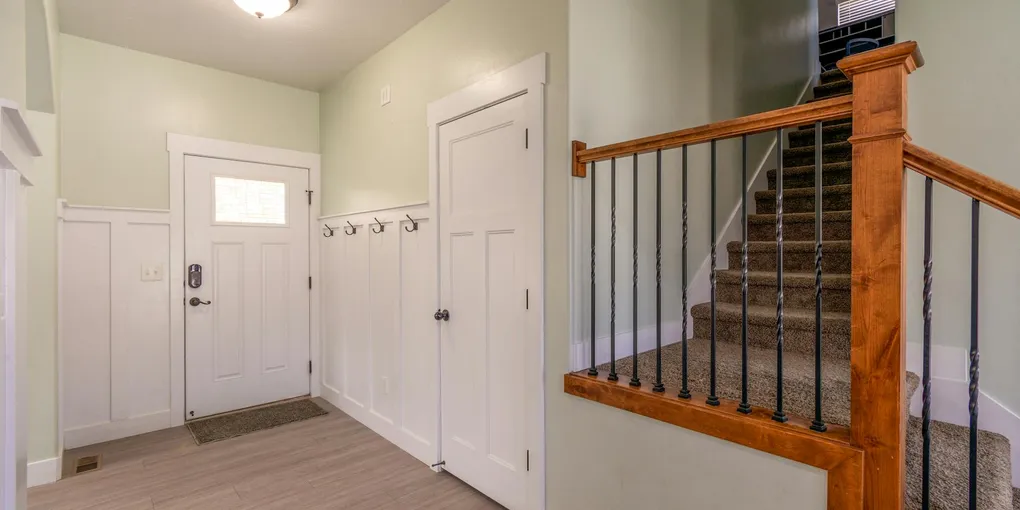
Loose stair railing repair: (1) Find the loose point — grip the rail at different points and push/pull to isolate whether the newel post, a specific baluster, or a wall bracket is moving. (2) Loose newel post: drive a long lag screw (3/8 x 5-inch) through the newel base into the framing below — this is the most durable fix. (3) Loose baluster: inject construction adhesive into the joint, clamp and let cure. (4) Loose wall bracket: relocate the screw to hit a stud, or use a toggle bolt. A railing that passes the 200-lb load test (grab it firmly and pull in all directions) is safe.
Frequently Asked Questions
Why do newel posts become loose over time?
Newel posts are typically attached at the base with either a bolted connection (dowel bolt through the post into the subfloor framing) or toe-nailed with finish nails. Both methods loosen over years of use — the forces applied when gripping the rail while going up and down stairs are cyclical and loosen joints gradually. In older homes, the original attachment may have been minimal. The most durable retrofit fix: a lag screw driven through the side of the post base at an angle into the structural stringer or floor framing — this pulls the post against the framing mechanically and resists movement in all directions.
How do I fix a wobbly newel post without taking it apart?
Two approaches that work without disassembly: (1) Lag screw fix: drill a 1/4-inch pilot hole at a 45-degree angle through the inside face of the newel post base (where it will be hidden), then drive a 3/8 x 5-inch lag screw into the stringer or subfloor framing. This pulls the post against the framing tightly. Countersink the screw head and fill with wood filler or a wood plug. (2) Epoxy injection: if the post has a loose mortise-and-tenon or dowel joint at the base, inject two-part polyurethane or epoxy adhesive (Loctite PL Premium, PC-Concrete) into the joint gap. Clamp the post firmly against the framing while the adhesive cures. The epoxy bonds the joint permanently.
How do I tighten loose wood balusters?
Wood balusters attach at the top (to the underside of the handrail or a shoe rail) and at the bottom (to the tread or a shoe rail). Loose balusters have failed glue joints — the baluster is no longer bonded to one or both contact points. Fix: inject construction adhesive (Loctite PL Premium, Liquid Nails) into the gap between the baluster and the rail/tread. Push the baluster firmly into alignment. Use a strap clamp or tape to hold it while curing (24 hours). For metal balusters: check whether the attachment uses a set screw at the top or bottom — tighten it with an Allen wrench. If the set screw holes are stripped: use a slightly larger set screw.
The wall-mounted handrail bracket is loose. How do I fix it?
Wall-mounted rail brackets attach with screws through the drywall into the framing. A loose bracket means the screws missed the stud or the stud holes are stripped. Fix: remove the bracket, locate the nearest stud center (use a stud finder or probe with a nail), and reinstall the bracket with the screws hitting the stud — 2.5-inch screws minimum into the stud. If the bracket location cannot move to align with a stud: use toggle bolts (snap toggle or TOGGLER brand) rated for 50 lbs minimum. For concrete or masonry walls: use 1/4-inch concrete anchors (Tapcon or sleeve anchors) with a hammer drill.
How tight should a stair railing be? Is there a safety standard?
IRC (International Residential Code) requires that handrails and guardrails withstand a 200-pound lateral force applied at any point. The practical test: grip the rail firmly and push sideways, pull toward you, and push away — the rail should not move noticeably in any direction. Balusters must resist a 50-pound concentrated load. For safety: if the newel post moves more than 1/4 inch at the top with moderate hand pressure, it needs repair before use. A railing that flexes but doesn't wobble (slight springiness in a long span) is normal and not a defect.
Loose stair railing repair: (1) Find the loose point — grip the rail at different points and push/pull to isolate whether the newel post, a specific baluster, or a wall bracket is moving. (2) Loose newel post: drive a long lag screw (3/8 x 5-inch) through the newel base into the framing below — this is the most durable fix.
Find the specific loose point first — a wobbly railing usually has one failure location, not a general looseness.
What you need
- Stud finder
- Drill and bits (1/4-inch and countersink bit)
- 3/8 x 5-inch lag screws (for newel post)
- Socket wrench
- Construction adhesive (for balusters)
- Wood filler or wood plugs (to cover countersunk screws)
Step 1: Find the loose point
Grip the railing at multiple points — near the newel post, in the middle of a run, near a wall bracket. Push sideways and pull toward you at each point. Isolate the movement to one specific component: newel post base, individual baluster, or wall bracket.
Step 2: Fix a loose newel post
Open the door to the space under the stairs (if accessible) or work from above. Drill a 1/4-inch pilot hole through the interior base of the newel post at 45 degrees into the stringer or floor framing. Drive a 3/8 x 5-inch lag screw with a socket wrench until the post pulls firmly against the framing.
Countersink the screw head, fill with wood filler or a hardwood plug. Let dry and sand flush.
Step 3: Fix loose balusters
Inject construction adhesive into the gap at the loose joint (top or bottom contact point). Push the baluster into proper alignment. Tape or clamp to hold position. Let cure 24 hours before applying weight.
Step 4: Fix a loose wall bracket
Remove the bracket and screws. Locate the stud with a stud finder — mark the center. Reposition the bracket slightly if needed to align with the stud. Re-attach with 2.5-inch screws driven firmly into the stud. If no stud is accessible: use toggle bolts rated for 50+ lbs.
Step 5: Test
Push and pull the railing firmly in all directions. No visible movement = safe. If movement remains: the repair needs additional fasteners or the lag screw didn’t hit solid framing (re-drill at a slightly different angle).
Related guides
- How to Fix Squeaky Stairs — fixing stair creaks alongside railing work
- How to Fix a Wall Anchor — repairing the wall after a failed bracket
- How to Fix a Broken Door Frame — similar structural wood repair techniques
- Identify the loose component
Push and pull the railing in all directions. Determine which component is loose: the newel post (the large post at the bottom or top of the stair), individual balusters (the vertical spindles between the rail and tread), or the wall bracket (on a wall-mounted rail). Each has a different fix. A railing that wobbles laterally at the newel post is the most common and most dangerous failure — prioritize this repair.
- Tighten a loose newel post
Newel posts are typically attached to a structural post below the floor or to the stair stringer. From below (if accessible): locate the through-bolt or lag screw connecting the post to the framing and tighten it. If there is no accessible fastener: drill a 3/8-inch access hole at an angle through the base of the newel post into the subfloor or stringer, drive a 3/8-inch lag screw with a washer through the newel into the framing, and plug the access hole with a wood dowel and wood filler. Two-part epoxy injected into the joint between the post base and the floor plate is a strong supplement.
- Fix loose balusters
Wood balusters are usually dowel-set or pin-nailed into the handrail above and the tread or base rail below. If the baluster is spinning or wobbling: inject construction adhesive (PL Premium or Loctite PL) into the joint at the top and bottom where the baluster meets the rail and tread, hold the baluster plumb, and let cure 24 hours. For a baluster that has pulled completely free: recut the dowel end if damaged, apply construction adhesive, and re-seat. Metal balusters in a track system are re-secured by tightening the set screw at the shoe at the base.
- Tighten a wall-mounted rail bracket
Wall rail brackets fail when screws pull out of drywall. Remove the bracket. If the bracket was screwed into drywall alone: relocate it to hit a stud (use a stud finder), or install a 3/4-inch plywood backer plate behind the drywall before remounting. Use 3-inch screws to reach through drywall into the stud. If the bracket is over concrete or masonry: drill pilot holes and use masonry anchors rated for at least 100 lbs. Remount the bracket, reinstall the rail, and test.
- Test to code
Grip the top of the railing and apply 200 lbs of force horizontally — building code requires rails to withstand this load. The railing should not flex more than 1 inch at the top. Check the baluster spacing by ensuring a 4-inch sphere cannot pass through any opening between balusters (required by current building codes to prevent child entrapment). A railing that fails these checks is a safety hazard and a liability — complete repairs before the stair is used.
Free: 10-Point Home Maintenance Checklist
Prevent costly repairs with this seasonal checklist. Save hundreds every year by catching problems early.
Your checklist is ready!
Open Checklist →Something went wrong. View the checklist here.