How to Fix a Door That Won't Latch: Adjust Strike Plate and Latch (2026)
A door that won't latch or latch properly is usually a strike plate alignment problem. This guide covers adjusting the strike plate, filing the strike plate hole, fixing a sticking latch, and shimming hinges.
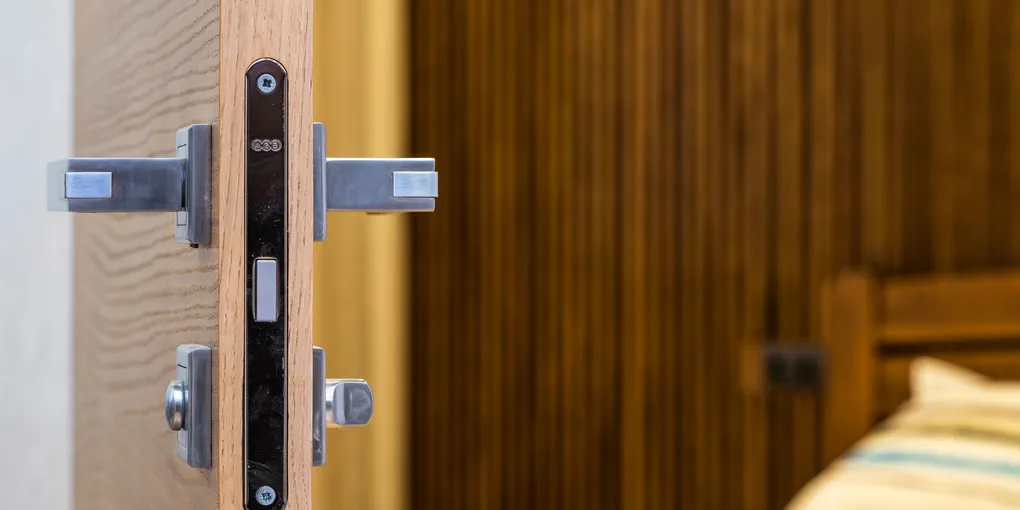
When a door won't latch, the latch bolt isn't aligning with the strike plate hole. The quickest diagnostic: coat the latch bolt with lipstick or pencil graphite and close the door — it leaves a mark on the strike plate showing exactly where the bolt is hitting. If the mark is close (within 1/4 inch), file the strike plate hole in the direction needed. If it's far off: loosen the strike plate and move it, or adjust the door hinges. Most fixes take 15–30 minutes.
Frequently Asked Questions
Why does my door suddenly not latch anymore?
Houses shift. Wood swells in humidity and contracts in dry months, moving the door frame and strike plate relative to the door. Common causes: (1) Seasonal wood movement — a door that latches fine in winter may not latch in humid summer months. (2) Foundation settling — the door frame has racked slightly. (3) Hinge screws worked loose — the hinge side of the door dropped. (4) Strike plate or door hardware shifted. Check when in the year the problem started — if it's seasonal, the fix may be temporary or you can wait for the wood to shrink back.
How do I tell if the strike plate needs to move up or down?
The lipstick test: apply a thin coat of lipstick, lip balm, or colored chalk to the latch bolt face. Close the door and press firmly. Open and look at the strike plate — the mark shows exactly where the latch is hitting. If the mark is above the hole, the latch is hitting high — move the plate up or file the top of the hole. If below, move the plate down or file the bottom. If centered but not going in, the plate is too far from the door — the door may be warped, or a shim is needed behind the plate.
What is a hinge shim and when do I use it?
A hinge shim is a thin piece of cardboard or thin metal placed behind a hinge leaf to push the door outward from the hinge side. When the latch side of the door is hitting the frame above the latch (binding at the top corner), shimming the top hinge pushes that corner away from the frame. When the door is hitting at the bottom of the latch side, shim the bottom hinge. Cardboard from a cereal box works as a shim.
The latch bolt itself won't retract. What's wrong?
If the latch bolt won't retract when you turn the knob, the problem is in the hardware, not the door alignment: (1) Loose or misaligned knob/lever — the spindle connecting the two knobs may have slipped. Open the door and try turning the knob: if it spins without retracting, the set screw on the knob needs tightening (small Allen wrench, usually on the side of the knob). (2) Frozen or dry latch mechanism — spray [dry lubricant](https://www.amazon.com/s?k=wd-40+dry+lubricant+spray+lock&tag=fixupfirst-20) into the latch bolt and work the knob back and forth. (3) Worn latch mechanism — replace the complete door handle set.
My door latches but pops open when the house pressure changes. What is that?
This is a pressure latch problem — the door closes and latches but the latch bolt isn't catching the strike plate solidly. The fix: the strike plate hole may be too shallow or the bolt is barely catching. File or chisel the strike plate hole 1/16 deeper, or move the plate slightly toward the door to let the bolt extend further into the hole. Also check: that the strike plate isn't loose (tighten the screws). If the screw holes are stripped: remove the plate, inject wood glue or toothpicks into the holes, let dry, re-drive screws.
When a door won’t latch, the latch bolt isn’t aligning with the strike plate hole. The quickest diagnostic: coat the latch bolt with lipstick or pencil graphite and close the door — it leaves a mark on the strike plate showing exactly where the bolt is hitting.
A door that won’t latch is a one-session fix. Start with the lipstick test and work from there.
What you need
- Lipstick, lip balm, or colored chalk
- Flat file or round chainsaw file (for enlarging strike plate hole)
- Screwdrivers (Phillips and flathead)
- 3-inch wood screws (for tightening hinges)
- Cardboard or hinge shims
- Chisel and hammer (optional, if moving the strike plate)
Step 1: Lipstick test — find where the latch is hitting
- Apply a thin coat of lipstick or pencil graphite to the face of the latch bolt.
- Close the door and press firmly.
- Open the door and look at the strike plate — the colored mark tells you exactly where the bolt is landing.
Interpret the mark:
- Mark above the hole: latch is hitting high → file the top of the strike hole, or move the plate up
- Mark below the hole: latch is hitting low → file the bottom, or move the plate down
- Mark on the side edge of the hole: latch is hitting the edge → file that edge or move plate sideways
- Mark is in the hole but door won’t latch: the bolt isn’t traveling far enough into the hole — see adjustment below
Fix 1: File the strike plate hole
If the latch bolt is close (within 1/8–1/4 inch of correct alignment), filing is fastest.
- Remove the strike plate (2 screws).
- Use a round file or flat file to enlarge the hole in the direction the mark indicates. File slowly — remove a little and test repeatedly.
- Reinstall and test with the latch.
Fix 2: Move the strike plate
If the latch is more than 1/4 inch off, physically move the strike plate.
- Remove the strike plate.
- Use a sharp chisel to deepen or extend the mortise (the recess in the doorframe) in the direction you need to move it.
- Reinstall the strike plate in the new position. If new screw holes are needed, predrill.
- Fill old screw holes with wooden toothpicks and wood glue — let dry, trim flush, re-drill.
Fix 3: Adjust the hinges
If the door sags (the latch side has dropped), the hinges are loose or the hinge mortises are too deep.
Tighten hinge screws: Use longer screws — replace the standard 3/4-inch screws with 3-inch screws that bite into the wall stud behind the frame. This often fixes a sagging door immediately.
Shim the hinge: If the door binds at the top latch corner: place cardboard shims behind the top hinge. If it binds at the bottom latch corner: shim the bottom hinge.
Shim procedure:
- Remove the hinge leaf from the door frame side (leave the hinge on the door side).
- Place cardboard shims behind the hinge leaf — one layer of typical cardboard = about 1/32 inch.
- Reinstall the hinge. Test the door. Add or remove shim layers as needed.
Fix 4: Tighten the latch knob/lever
If the latch bolt won’t retract:
- Open the door so the latch is accessible.
- Find the small hole or set screw on the side or base of the knob/lever.
- Insert an Allen wrench (usually 3/32 or 1/8 inch) and tighten clockwise.
- Test the retraction. If the spindle is stripped or the mechanism is worn, replace the complete handle set.
Related guides
- How to Fix a Door That Won’t Close — when the door is binding in the frame, not just the latch
- How to Fix a Squeaky Door Hinge — lubricate and repair hinges
- How to Fix a Door Draft — seal gaps after alignment is fixed
- How to Fix a Loose Door Handle — tighten a handle that wobbles or fails to engage the latch
- How to Weatherstrip a Door — seal gaps after alignment is fixed
- Lipstick test — find where the latch is hitting
Apply a thin coat of lipstick or pencil graphite to the face of the latch bolt. Close the door and press firmly. Open and look at the strike plate — the colored mark shows exactly where the bolt is landing: above the hole means hitting high, below means hitting low, on the side edge means lateral offset.
- File the strike plate hole for minor offset
If the latch bolt is within 1/4 inch of correct alignment: remove the strike plate (2 screws) and use a round or flat file to enlarge the hole in the direction the mark indicates. Work slowly and test frequently — remove a little at a time. Reinstall and test with the latch.
- Move the strike plate for larger offset
If the latch is more than 1/4 inch off: remove the strike plate. Use a sharp chisel to extend the mortise in the direction needed. Reinstall the strike plate in the new position. Fill old screw holes with toothpicks and wood glue, let dry, trim flush, then predrill and reinstall.
- Adjust hinges for a sagging door
If the latch side of the door has dropped, replace hinge screws with 3-inch screws that bite into the stud behind the frame. If still binding at the top corner: place cardboard shims behind the top hinge leaf to push that corner away from the frame. One layer of cereal box cardboard equals about 1/32 inch of adjustment.
Free: 10-Point Home Maintenance Checklist
Prevent costly repairs with this seasonal checklist. Save hundreds every year by catching problems early.
Your checklist is ready!
Open Checklist →Something went wrong. View the checklist here.