How to Fix a Broken Garage Floor Epoxy
Learn how to repair peeling, bubbling, or cracked epoxy garage floor coating so the surface looks clean and holds up for years.
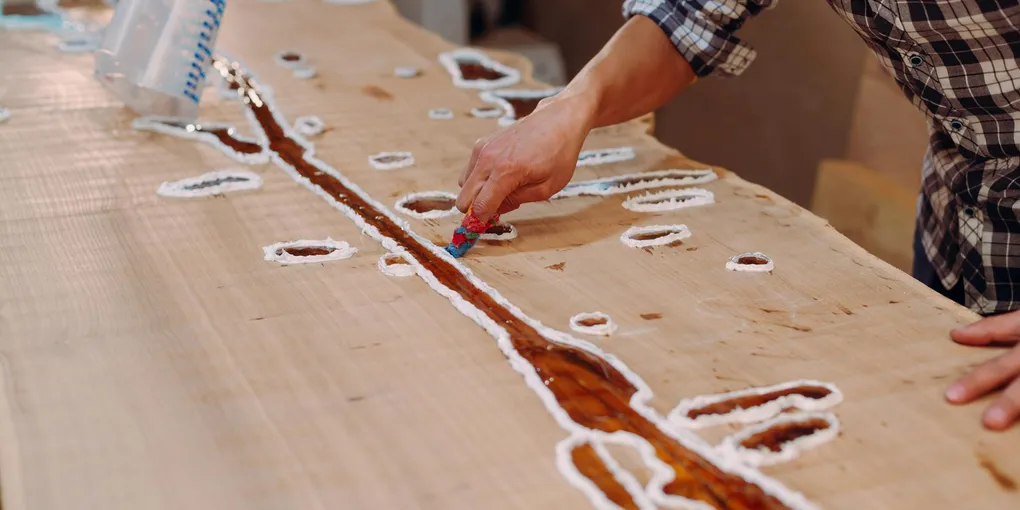
Peeling, bubbling, or cracked garage floor epoxy is a common problem, but it is very fixable.
Peeling, bubbling, or cracked garage floor epoxy is a common problem, but it is very fixable. Most repairs require only a half-day of work, some specialized cleaner, and a patch epoxy kit from the hardware store.
What You Need
- Angle grinder with diamond cup wheel — to grind back the damaged epoxy and profile the concrete
- Concrete floor cleaner degreaser — removes oil and contaminants before patching
- Two-part epoxy patch kit for concrete floors — bonds to cleaned concrete and existing epoxy edges
- Muriatic acid or concrete etching solution — opens concrete pores for maximum patch adhesion
- Notched squeegee or foam roller — for spreading epoxy evenly across the patch area
- Decorative color flakes — to blend the repaired section with the rest of the floor
- Safety glasses and chemical-resistant gloves — required when working with epoxy and acid etching products
- Shop vacuum — to remove grinding dust and debris before applying epoxy
Understanding Why Epoxy Fails
Before patching, it is important to understand why the epoxy failed in the first place. Patching over an unresolved problem will produce the same result in another year.
Adhesion failure (peeling). The epoxy did not bond to the concrete because the surface was contaminated with oil, had residual sealer, or was not properly profiled before coating. The fix requires removing all failed epoxy back to bare concrete, cleaning aggressively, and profiling the concrete before recoating.
Moisture (bubbles). Moisture vapor pushed up through the epoxy during cure, creating a blister or bubble. The fix requires removing the bubbled section, addressing any moisture issues (such as improving exterior drainage or sealing foundation cracks), and recoating when the concrete is fully dry.
Mechanical damage (cracks or chips). Impact from a dropped tool or vehicle traffic cracked the epoxy coating. If the concrete below is intact, this is purely a surface repair.
Step 1: Remove All Damaged Epoxy
The most important rule in epoxy repair is that the patch must bond to solid, intact epoxy or bare concrete — never to loose or peeling material.
Mark the boundary. Find the edge where the damaged epoxy transitions to firmly adhered epoxy. Use a screwdriver to probe — tap along the surface and listen for a hollow sound, which indicates delamination. Mark the full boundary of the damaged area with chalk.
Score around the perimeter. Use an angle grinder or oscillating tool to score a clean edge around the repair area. This creates a defined border and prevents the existing good epoxy from peeling back further during the removal process.
Remove the damaged epoxy. Use an angle grinder with a diamond cup wheel to grind off the failed epoxy within the marked area. Work in overlapping passes. You are done when you see uniform concrete gray — no epoxy residue, no discoloration from oil contamination.
Vacuum thoroughly. Use a shop vacuum to remove all grinding dust. Dust left on the surface will act as a barrier between the concrete and the patch epoxy.
Step 2: Clean and Profile the Concrete
This step is what separates a patch that lasts from one that fails in a few months.
Degrease the concrete. Apply a concrete floor degreaser to the entire repair area and scrub with a stiff brush. Pay extra attention to any dark spots that indicate oil or grease penetration. Rinse thoroughly with clean water and let the surface dry completely — at least 24 hours. If you can see any oil sheen after cleaning, the area needs a second degreaser application.
Test for moisture. Tape a 12-by-12-inch piece of plastic sheeting to the dry concrete and seal all edges with tape. Leave it for 24 hours. If condensation appears on the underside of the plastic, moisture is actively wicking through the concrete. Do not apply epoxy until the moisture issue is resolved — this may mean improving the grading around the garage or applying a penetrating moisture barrier.
Etch the concrete. Mix muriatic acid etching solution according to package directions (typically one part acid to ten parts water, always adding acid to water, never water to acid). Spread it over the repair area and let it fizz for the time specified on the label. Rinse thoroughly with clean water until the pH of the runoff is neutral (test with pH strips). The concrete should feel like coarse sandpaper when dry — this texture is what the epoxy grips.
Final vacuum. Once the concrete is completely dry, vacuum once more to remove any residue.
Step 3: Prepare and Mix the Patch Epoxy
Two-part epoxy consists of a resin (Part A) and a hardener (Part B). They must be mixed in the exact ratio specified by the manufacturer — usually 1:1 or 2:1 by volume. Getting the ratio wrong means the epoxy will not cure properly.
Condition the materials. Both parts of the epoxy should be at room temperature — ideally 65 to 75 degrees Fahrenheit. Cold epoxy does not mix thoroughly and cures slowly. If the garage is cold, bring the epoxy inside overnight before use.
Mix thoroughly. Combine Part A and Part B in a clean bucket. Stir slowly with a mixing stick or drill-mounted mixing paddle for two to three minutes. Scrape the sides and bottom of the bucket as you stir. Insufficient mixing leaves uncured pockets that will remain tacky or peel.
Note the pot life. Most two-part epoxies have a working time of 30 to 45 minutes once mixed. Do not mix more than you can apply in that window. Mix in smaller batches if the repair area is large.
Step 4: Apply the Patch Coat
Prime the edges. Before pouring the bulk epoxy, use a small brush to paint epoxy onto the scored perimeter edge and work it into the transition between old epoxy and bare concrete. This ensures good adhesion at the most critical boundary.
Pour and spread. Pour the mixed epoxy into the repair area. Use a notched squeegee to spread it evenly to a thickness of about 1/8 inch. Work from the edges inward to avoid stepping on freshly coated concrete. The notched squeegee creates a uniform film thickness that cures consistently.
Apply color flakes. If your floor has decorative color flakes, broadcast them over the wet epoxy immediately after spreading. Hold your hand about two feet above the surface and toss small handfuls in a sweeping motion for even distribution. Apply slightly more flakes than you think you need — excess flakes that do not embed will be vacuumed off before the topcoat.
Let it cure. Allow the patch coat to cure for the time specified on the package — typically 16 to 24 hours for a recoat-ready surface. The epoxy should feel solid and non-tacky before you apply a topcoat.
Step 5: Apply the Topcoat
Vacuum loose flakes. If you applied decorative flakes, vacuum the surface gently to remove any that did not embed in the epoxy.
Mix and apply the topcoat. Mix a second batch of clear epoxy (or the topcoat product specified by your epoxy system) and apply it over the cured patch coat and feathering it into the surrounding existing floor surface. Use a foam roller for even coverage. The topcoat seals the flakes, adds gloss, and creates the wearing surface that protects the patch.
Allow full cure. The topcoat needs 24 hours before foot traffic and 72 hours before vehicle traffic. Do not park a car on a freshly coated concrete floor during this time — tire contact on partially cured epoxy can leave permanent marks.
Long-Term Maintenance
Sweep garage floors weekly to remove the abrasive grit that grinds epoxy over time. Clean oil drips immediately with a degreaser before they penetrate. Every two to three years, inspect the floor for early signs of peeling at edges or near the garage door where water and salt are most active. Catching small problem areas early makes repairs simple — waiting until failure spreads over the whole floor means a complete redo.
Related Reading
- How to Install Vinyl Plank Flooring — a flooring upgrade option for interior spaces
- How to Organize a Garage — make the most of the floor space you just repaired
- How to Fix Concrete Cracks — address the concrete itself before any coating project
- Remove All Damaged Epoxy
The most important rule in epoxy repair is that the patch must bond to solid, intact epoxy or bare concrete — never to loose or peeling material.
- Clean and Profile the Concrete
This step is what separates a patch that lasts from one that fails in a few months.
- Prepare and Mix the Patch Epoxy
Two-part epoxy consists of a resin (Part A) and a hardener (Part B). They must be mixed in the exact ratio specified by the manufacturer — usually 1:1 or 2:1 by volume. Getting the ratio wrong means the epoxy will not cure properly.
- Apply the Patch Coat
Prime the edges. Before pouring the bulk epoxy, use a small brush to paint epoxy onto the scored perimeter edge and work it into the transition between old epoxy and bare concrete. This ensures good adhesion at the most critical boundary.
- Apply the Topcoat
Vacuum loose flakes. If you applied decorative flakes, vacuum the surface gently to remove any that did not embed in the epoxy.
Free: 10-Point Home Maintenance Checklist
Prevent costly repairs with this seasonal checklist. Save hundreds every year by catching problems early.
Your checklist is ready!
Open Checklist →Something went wrong. View the checklist here.