How to Fix a Broken Cabinet Hinge in 10 Minutes (Without Stripping the Wood)
Broken cabinet hinge? Tighten loose screws with toothpicks and wood glue, replace bent European hinges for $2–$8, or use oversized screws for stripped holes. Fixes that last — no new drill holes needed.
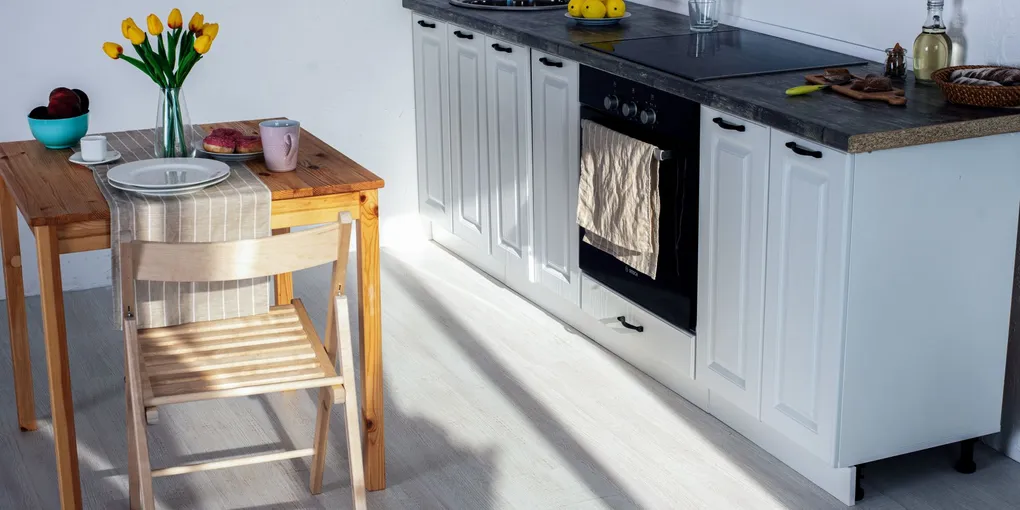
Fixing a broken or loose cabinet hinge: (1) For a hinge with stripped screw holes: remove the hinge, fill holes with toothpicks and wood glue, let dry 1 hour, then reattach — the wood fibers give the screw new purchase. (2) For a bent hinge: most European-style cup hinges have adjustment screws — use a Phillips screwdriver to adjust the door up/down, left/right, and in/out without removing anything. (3) For a physically broken hinge: take the old hinge to a hardware store for an exact match, or measure the cup diameter (26mm or 35mm) and mounting hole spacing. European hinges are interchangeable across brands by these dimensions. (4) For face-frame hinges on older cabinets: replace with an exact-match hinge (butt, semi-concealed, or surface-mount). A replacement hinge costs $3–$15.
Frequently Asked Questions
How do I know if my cabinet hinge needs repair or full replacement?
If the hinge is bent, cracked, or the mounting holes are stripped and won't hold screws, replace it. If the hinge itself is intact but the door sags or doesn't close flush, adjustment is usually enough — most European-style cup hinges have built-in adjustment screws for up/down, left/right, and in/out positioning.
What type of hinge do most modern kitchen cabinets use?
Most cabinets built after the 1990s use concealed European-style cup hinges (also called Blum hinges or 35mm hinges). These mount inside the door with a round cup and attach to an adjustable baseplate on the cabinet box. Older cabinets use surface-mounted butt hinges visible on the outside of the door.
How do I fix a stripped screw hole in a cabinet hinge?
Pack the stripped hole with wooden toothpicks and wood glue, let cure overnight, then trim flush. This fills the void and gives the screw threads fresh wood to grip. For larger voids, use a wooden golf tee or a short length of dowel rod. Avoid matchsticks — they often lack enough fiber density to hold long-term.
My cabinet door hits the adjacent door when closing. How do I fix it?
This is a side-to-side alignment issue. On European cup hinges, locate the side adjustment screw on the mounting baseplate — it typically moves the door left or right in 1–2mm increments. Turn it in small increments and test until the door clears its neighbor without a gap on the hinge side.
Can I replace just one hinge on a cabinet door?
Yes, but try to match the existing hinge exactly — same brand, overlay type (full overlay, half overlay, or inset), and opening angle. Mismatched hinges cause the door to hang unevenly. If you cannot find an exact match, replace both hinges on that door as a pair.
How many screws should each cabinet hinge have?
European cup hinges typically use 2 screws on the door side (holding the cup) and 2 screws on the cabinet side (holding the baseplate) — 4 screws per hinge total. Surface-mounted butt hinges use 2–4 screws per leaf. Using all provided screw holes is important; missing screws are a common cause of hinge failure under repeated use.
What is the difference between full overlay, half overlay, and inset cabinet hinges?
Overlay refers to how much the door covers the cabinet frame. Full overlay: the door covers the entire face frame or side of the frameless cabinet box — doors sit flush with each other when adjacent. Most modern cabinets use full overlay. Half overlay (also called 1/2 overlay): the door covers only half the face frame, leaving the other half exposed for an adjacent door. Used when two doors share a center stile. Inset: the door sits inside the face frame, flush with it — traditional Shaker-style look, requires precise fitting. Hinge type must match your overlay: a full overlay hinge on a half overlay installation causes the door to misalign. When replacing hinges, check your existing hinge label or measure the overlay (distance the door extends beyond the cabinet opening) to confirm which type you have.
How do I adjust a cabinet door that won't close flush with adjacent doors?
European cup hinges have three adjustment directions built into the baseplate. In/out (depth): the screw closest to the cup — adjusts how far the door stands off the cabinet face. Left/right (side): the screw on the baseplate slide — moves the door parallel to the frame. Up/down (height): loosen the mounting screws on one or both hinges and physically slide the door up or down, then re-tighten. For a door that gaps at one corner: it's usually a height issue (one hinge higher than the other). Adjust the lower hinge upward 1–2mm increments until the door lines up. Each adjustment requires only a Phillips screwdriver — no disassembly needed.
Fixing a broken or loose cabinet hinge: (1) For a hinge with stripped screw holes: remove the hinge, fill holes with toothpicks and wood glue, let dry 1 hour, then reattach — the wood fibers give the screw new purchase.
A broken or misaligned cabinet hinge is one of the most common kitchen repairs. Whether the hinge is bent, the screw holes have stripped out, or the door just won’t close flush, this guide covers the full fix in under an hour.
What You Need
- Flathead and Phillips screwdrivers
- Replacement cabinet hinges (match your existing hinge type and overlay)
- Wood toothpicks and wood glue (for stripped screw holes)
- Drill with 35mm Forstner bit (only if installing new cup hinges from scratch)
- Tape measure and pencil
- Small square or level
Step 1: Diagnose the Problem
Open and close the cabinet door slowly and watch the hinge action. Common issues and their fixes:
- Door sags or drops at the latch side — the hinge screws are loose or the holes are stripped
- Door doesn’t close flush — hinge needs adjustment or is bent
- Hinge is visibly cracked or bent — replace the hinge
- Door swings open on its own — hinge spring tension has failed; replace the hinge
Step 2: Tighten Loose Hinge Screws
Start with the simplest fix. Open the door fully and tighten every screw on both the door and cabinet side of each hinge. If screws spin freely without tightening, the holes are stripped — move to Step 3.
Step 3: Fix Stripped Screw Holes
Remove the hinge from the cabinet or door. Dip several wooden toothpicks in wood glue and pack them firmly into the stripped hole. Break them off flush with the surface. Let the glue cure for at least 2 hours (overnight is ideal).
Once cured, drive the screw back in — it will cut new threads into the filled wood. Do not overtighten.
For larger stripped holes, use a wooden golf tee coated in glue as a plug instead of toothpicks.
Step 4: Adjust a European Cup Hinge
European hinges have three built-in adjustment points — no tools needed beyond a Phillips screwdriver:
Side-to-side adjustment: The screw on the mounting baseplate moves the door left or right. Turn clockwise to move the door toward the hinge side; counterclockwise to move it away.
In-and-out adjustment: Loosen the baseplate mounting screw slightly and slide the plate forward or back in its slot to bring the door closer to or farther from the cabinet face. Retighten.
Up-and-down adjustment: On hinges with a vertical slot on the baseplate, loosen the mounting screw and slide the plate up or down. Some hinge models use an eccentric cam screw for this instead.
Make small adjustments (1–2mm at a time) and close the door to check after each change.
Step 5: Replace a Damaged Hinge
If the hinge is cracked or bent, remove it entirely. Take it to the hardware store to match the type and overlay. Most European cup hinges are interchangeable as long as the cup diameter (35mm is standard) and overlay rating match.
To install the replacement:
- Align the new hinge cup with the existing 35mm hole in the door (no drilling needed if the old cup fit correctly)
- Drive the two cup screws into the door — do not overtighten
- Snap or screw the baseplate onto the cabinet side
- Use the adjustment screws to fine-tune the door position
Step 6: Test and Final Check
Close the door and check:
- The door sits flush with neighboring doors
- The gap around the door is even on all sides
- The door opens and closes smoothly without binding
- The door stays closed without bouncing back open
If the door still sags after replacing both hinges, check whether the cabinet box itself is out of square — sometimes shimming the cabinet or adjusting the shelf is the real fix.
Related Guides
- How to Paint Kitchen Cabinets — refinish while the doors are off
- How to Fix a Cabinet Door That Won’t Stay Closed — magnetic catch and latch repairs
- Kitchen Cabinet Organization Ideas — maximize the cabinet space you just fixed
- Diagnose the Problem
Open and close the cabinet door slowly and watch the hinge action. Common issues and their fixes:
- Tighten Loose Hinge Screws
Start with the simplest fix. Open the door fully and tighten every screw on both the door and cabinet side of each hinge. If screws spin freely without tightening, the holes are stripped — move to Step 3.
- Fix Stripped Screw Holes
Remove the hinge from the cabinet or door. Dip several wooden toothpicks in wood glue and pack them firmly into the stripped hole. Break them off flush with the surface. Let the glue cure for at least 2 hours (overnight is ideal).
- Adjust a European Cup Hinge
European hinges have three built-in adjustment points — no tools needed beyond a Phillips screwdriver:
- Replace a Damaged Hinge
If the hinge is cracked or bent, remove it entirely. Take it to the hardware store to match the type and overlay. Most European cup hinges are interchangeable as long as the cup diameter (35mm is standard) and overlay rating match.
- Test and Final Check
The door sits flush with neighboring doors
Free: 10-Point Home Maintenance Checklist
Prevent costly repairs with this seasonal checklist. Save hundreds every year by catching problems early.
Your checklist is ready!
Open Checklist →Something went wrong. View the checklist here.