How to Paint a Garage Floor with Epoxy or Floor Paint
A complete guide to cleaning, etching, priming, and applying epoxy or floor paint to a concrete garage floor for a durable, professional finish.
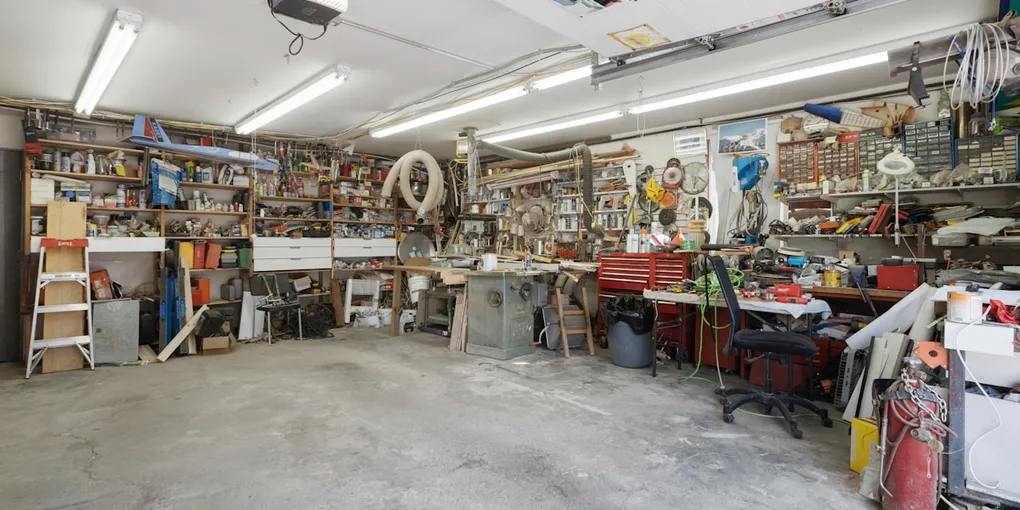
Painting a garage floor with epoxy: (1) Test for moisture: tape plastic sheeting to the floor for 24 hours — if moisture beads underneath, the slab has a moisture problem that will cause epoxy to peel. Fix before painting. (2) Etch the concrete with muriatic acid (1 part acid to 10 parts water) or a commercial concrete etcher — this opens the pores for bonding. Rinse thoroughly and let dry completely (48+ hours). (3) Fill any cracks with concrete crack filler. (4) Apply 100% solids epoxy (Rust-Oleum RockSolid, ArmorPoxy) with a roller, working in 4x4 foot sections. Most systems are two-part — mix and apply within the pot life window (30 to 45 minutes). (5) Broadcast colored chips while still wet. (6) Let cure 24 hours before foot traffic, 72 hours before parking vehicles. Temperature must be above 55 F during application and curing.
Frequently Asked Questions
Do I need to etch my concrete before painting the garage floor?
Yes, acid etching is critical for bare concrete. It opens the pores of the concrete so the epoxy or floor paint bonds properly. Skip this step and you risk peeling within a few months, especially in high-traffic areas.
How long does garage floor epoxy last?
A properly applied 2-part epoxy coating typically lasts 5 to 10 years with normal vehicle traffic. Water-based 1-part floor paint lasts 2 to 4 years. Your prep work is the biggest factor — floors that were not thoroughly cleaned or etched fail much sooner.
Can I paint a garage floor that has oil stains?
You can, but you must degrease and treat oil stains first. Use a concrete degreaser and scrub thoroughly. Heavily saturated stains may need TSP (trisodium phosphate) or a dedicated oil stain primer. Painting over untreated oil always leads to peeling.
How long do I have to wait after etching before I apply epoxy?
The concrete must be completely dry — typically 24 hours after rinsing, though in humid conditions you should wait 48 hours. Moisture trapped beneath the coating is the number one cause of bubbling and adhesion failure.
Should I add an anti-slip additive to garage floor paint?
Yes, especially if you live somewhere with rain or snow. Anti-slip additives like aluminum oxide or polymer grit are mixed directly into the topcoat and make the surface far safer when wet. They add almost no cost and take no extra effort.
How many coats of epoxy do I need for a garage floor?
Most 2-part epoxy kits call for one coat of epoxy followed by one clear topcoat. For heavier use — multiple vehicles, motorcycles, workshop traffic — apply two coats of epoxy plus the clear topcoat. Always follow the manufacturer's recoat window so layers bond properly.
Painting a garage floor with epoxy: (1) Test for moisture: tape plastic sheeting to the floor for 24 hours — if moisture beads underneath, the slab has a moisture problem that will cause epoxy to peel. Fix before painting.
A freshly painted garage floor transforms the look of the entire space. It resists oil drips, makes sweeping easy, and gives the room a finished, professional feel. The catch is that concrete is an unforgiving substrate — skip the prep and the paint peels within months. Follow the steps below and your finish will hold up to years of daily driving, foot traffic, and the occasional dropped wrench.
What You Need
Gather everything before you start. Stopping mid-project to run to the hardware store can ruin your coating if it dries unevenly.
- 2-part epoxy garage floor kit — covers roughly 250 sq ft per kit for most single-car garages
- Concrete etching solution (muriatic acid or citric-acid etch) — required for bare or previously uncoated concrete
- Concrete degreaser — removes oil, grease, and tire rubber before etching
- Anti-slip floor paint additive — aluminum oxide or polymer grit for safety
- Stiff-bristle scrub brush or floor buffer — for scrubbing in the degreaser and etch
- 9-inch roller with 3/8-inch nap covers — the right nap thickness fills the texture of concrete without leaving holidays
Step 1 — Clear the Floor and Inspect the Concrete
Move everything out of the garage. Epoxy kits have a working time (also called pot life) of 20 to 30 minutes once mixed, so you cannot stop to shuffle boxes mid-application.
With the floor empty, inspect every square foot:
- Active moisture: Tape a piece of plastic sheeting to the floor with all edges sealed. Wait 24 hours. If condensation collects under the plastic, you have a moisture problem. Painting over a wet slab will fail — address the source of moisture first.
- Cracks and spalling: Fill cracks wider than a hairline with a concrete crack filler before you etch. Thin cracks can be left as-is; the epoxy will bridge them.
- Previous sealers: Drop a few drops of water on the surface. If it beads up, there is an existing sealer that must be ground off. Epoxy will not bond to a sealed surface.
- Old paint: Peeling or flaking paint must be removed by grinding or shot blasting. Sound, well-bonded old paint can sometimes be painted over with 1-part floor paint, but not with 2-part epoxy unless the manufacturer specifically allows it.
Step 2 — Degrease Thoroughly
Even if your floor looks clean, concrete absorbs oil and tire rubber over years of use. Those contaminants will prevent adhesion.
Apply a concentrated concrete degreaser according to the label — most dilute with water and are applied with a pump sprayer or poured directly onto the floor. Work it in with a stiff-bristle scrub brush in 4x4-foot sections. Let it dwell 5 to 10 minutes, then rinse thoroughly with a garden hose or pressure washer.
Pay special attention to the areas directly under where your car parks. These almost always have more oil than the rest of the floor, even if you cannot see it.
Allow the floor to dry completely before moving to etching — at least several hours in warm, dry weather.
Step 3 — Acid Etch the Surface
Etching creates a slightly rough “tooth” on the concrete surface that gives the epoxy something to grip. New concrete that has never been painted almost always needs etching; older concrete may only need light etching if it is already porous.
Safety first: Wear rubber gloves, safety glasses, and old clothes. Work with the garage door fully open. Have your garden hose ready before you open the etching solution.
- Pre-wet the entire concrete surface with clean water.
- Apply the etching solution per the manufacturer’s directions. Muriatic acid-based etch is diluted 1 part acid to 10 parts water; pour the acid into the water, never the reverse.
- Scrub the solution into the concrete with a stiff brush. You should see light fizzing — this means the acid is reacting with the concrete and opening the pores.
- Allow to dwell per the label (usually 5 to 10 minutes), then rinse completely with a large volume of water. Rinse twice to ensure all acid is neutralized.
- Some kits include a baking soda neutralizer packet — dissolve it in water and rinse the floor with that solution before your final water rinse.
After etching, the surface should look and feel like fine sandpaper. If it still feels slick or glassy in spots, re-etch those areas.
Allow the floor to dry completely — 24 hours minimum, 48 hours in humid weather.
Step 4 — Mix and Apply the Epoxy Primer (If Required)
Some 2-part epoxy kits include a separate primer coat; others go directly to the epoxy. Read your specific kit’s instructions.
If a primer is included, mix Part A and Part B together per the ratios in the instructions. Stir slowly for a full two minutes to ensure the hardener is fully incorporated — undermixed epoxy will not cure properly.
Cut in the edges with a brush, then roll the primer onto the floor with your 3/8-inch nap roller. Work in 4-foot-wide strips, moving from the back of the garage toward the door. Keep a wet edge at all times.
Allow the primer to cure for the time specified on the kit before applying the color coat.
Step 5 — Apply the Epoxy Color Coat
This is where the floor starts looking great. Mix the color epoxy thoroughly — again, a full two minutes of stirring. Once mixed, you have a limited working time, so move with purpose.
Pour a ribbon of epoxy across the back of the garage and roll it out immediately. Work in manageable sections and maintain a wet edge. Backroll each section (roll back through the wet epoxy you just applied) to even out roller marks and work the coating into the concrete texture.
If your kit includes color flakes (also called chip or flake broadcast), sprinkle them by hand into the wet epoxy immediately after rolling each section. Vary the throw to get even coverage.
Anti-slip additive: If you chose to use an anti-slip grit, the manufacturer will specify whether to mix it into the epoxy or broadcast it onto the wet surface — follow that guidance exactly.
Allow the color coat to cure fully before applying the topcoat — typically 12 to 24 hours, depending on temperature.
Step 6 — Apply the Clear Topcoat
The clear topcoat is what gives epoxy floors their signature gloss and protects the color coat from abrasion, UV, and chemical spills. Mix and apply it exactly as you did the color coat.
If you did not mix an anti-slip additive into the color coat, this is your last chance — add it to the topcoat before application.
Apply two thin coats of topcoat if you want maximum durability and depth of gloss. Allow full cure time between coats per the manufacturer’s instructions.
Step 7 — Cure Time Before Driving On
This is the step most people rush and regret. Epoxy may feel dry to the touch in 12 hours but is not fully cured for 72 hours to 7 days, depending on temperature and humidity. Driving on it before it has cured will leave tire marks that are nearly impossible to remove.
- Foot traffic: 24 hours after final coat
- Light items / boxes: 48 hours
- Vehicle traffic: 72 hours minimum; 7 days is ideal in cooler weather
Keep the garage door open for ventilation during curing. Avoid parking if temperatures will drop below 50°F (10°C) overnight — cold inhibits proper cure.
Troubleshooting Common Problems
Bubbles in the finish: Almost always caused by moisture in the concrete or rolling too fast. Work slower and ensure the concrete was fully dry.
Peeling in patches: Indicates missed degreasing or inadequate etching. Strip the peeling sections, re-etch, and spot repair.
Tacky or soft finish: Usually means undermixed epoxy or application in temperatures below 50°F. Strip and reapply; there is no fixing under-cured epoxy.
Lap marks: Caused by allowing sections to dry before joining them. Mix smaller batches and work faster, or have a second person rolling while you pour and cut in.
Maintenance Tips
Once cured, epoxy floors are among the easiest garage surfaces to maintain:
- Sweep weekly and mop monthly with a pH-neutral cleaner
- Wipe up oil, transmission fluid, or battery acid as soon as possible — they can etch the coating if left to sit
- Place rubber anti-fatigue mats in work areas to protect the coating from dropped tools
- Reapply a fresh clear topcoat every 2 to 3 years in high-traffic garages
Related Reading
- Epoxy Garage Floor Cost — professional epoxy as an alternative to paint; $3–$12/sq ft
- How to Organize Your Garage on a Budget
- How to Fix Cracks in a Concrete Driveway
- How to Install a Garage Door Opener
- Step 1 — Clear the Floor and Inspect the Concrete
Move everything out of the garage. Epoxy kits have a working time (also called pot life) of 20 to 30 minutes once mixed, so you cannot stop to shuffle boxes mid-application.
- Step 2 — Degrease Thoroughly
Even if your floor looks clean, concrete absorbs oil and tire rubber over years of use. Those contaminants will prevent adhesion.
- Step 3 — Acid Etch the Surface
Etching creates a slightly rough "tooth" on the concrete surface that gives the epoxy something to grip. New concrete that has never been painted almost always needs etching; older concrete may only need light etching if it is already porous.
- Step 4 — Mix and Apply the Epoxy Primer (If Required)
Some 2-part epoxy kits include a separate primer coat; others go directly to the epoxy. Read your specific kit's instructions.
- Step 5 — Apply the Epoxy Color Coat
This is where the floor starts looking great. Mix the color epoxy thoroughly — again, a full two minutes of stirring. Once mixed, you have a limited working time, so move with purpose.
- Step 6 — Apply the Clear Topcoat
The clear topcoat is what gives epoxy floors their signature gloss and protects the color coat from abrasion, UV, and chemical spills. Mix and apply it exactly as you did the color coat.
Free: 10-Point Home Maintenance Checklist
Prevent costly repairs with this seasonal checklist. Save hundreds every year by catching problems early.
Your checklist is ready!
Open Checklist →Something went wrong. View the checklist here.