How to Fix a Tripped Circuit Breaker
Learn how to safely reset a tripped circuit breaker, identify the root cause of the trip, and know when the breaker itself needs to be replaced.
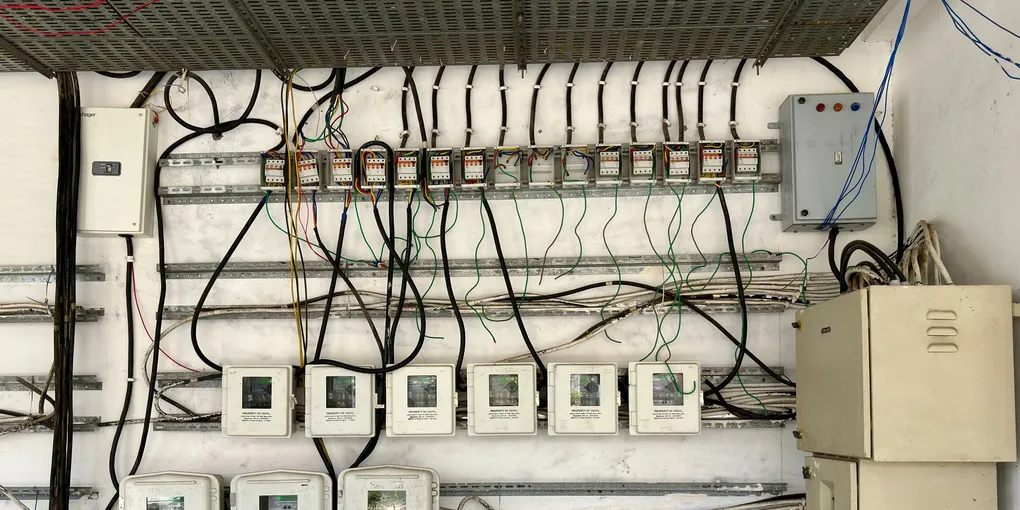
A tripped circuit breaker is one of the most common household electrical issues. Unlike a blown fuse, a tripped breaker is a quick fix in most cases — but only if you take the right steps and understand why the breaker tripped in the first place.
A tripped circuit breaker is one of the most common household electrical issues. Unlike a blown fuse, a tripped breaker is a quick fix in most cases — but only if you take the right steps and understand why the breaker tripped in the first place. A breaker that trips frequently is telling you something important about the electrical load on that circuit.
This guide walks through the safe process of resetting a tripped breaker, finding the root cause, and knowing when to call a professional.
Why Breakers Trip
Circuit breakers are protective devices. They monitor the current flowing through a circuit and trip open automatically when the current exceeds the breaker rating. There are three main reasons a breaker trips:
Overload: Too many devices drawing power at the same time exceed the circuit capacity. A 15-amp circuit (the most common in homes) can safely supply about 1,440 watts continuously. Running a space heater, hair dryer, and microwave on the same circuit simultaneously will exceed that limit.
Short circuit: A “hot” wire and a neutral wire make direct contact due to damaged insulation, a loose connection, or a faulty appliance. A short circuit produces a sudden large surge of current that trips the breaker nearly instantly. This is a more serious fault than a simple overload.
Ground fault: A hot wire contacts a grounded surface (a metal box, a wet surface, or a grounding wire). GFCI breakers and GFCI outlets are designed to detect ground faults far more sensitively than standard breakers.
What You Need
- Non-contact voltage tester — always verify power status before working near wiring
- Flashlight or headlamp — electrical panels are often in dim utility areas
- Electrical panel directory or blank label set
- Notepad for mapping the circuit
- Clamp meter or plug-in outlet tester — for diagnosing load and wiring issues
Step 1 — Locate the Tripped Breaker
Go to your electrical panel (breaker box). It is typically located in a utility room, garage, basement, or hallway. Open the panel door.
Look for the breaker that is in the middle or “tripped” position. Most residential breakers show three positions:
- On — handle fully toward the center of the panel
- Off — handle fully away from the center
- Tripped — handle in the middle, often with a small red or orange indicator visible in the window on the breaker face
Some breakers trip cleanly to the off position without stopping in the middle. If no breaker is obviously tripped but you have a dead circuit, check every breaker in the panel. If the affected circuit has a GFCI outlet or GFCI breaker, check those reset buttons first before going to the main panel.
Step 2 — Identify and Remove the Cause of the Trip
Before resetting the breaker, find out why it tripped.
If you suspect an overload:
- Unplug or turn off all devices on the affected circuit — every outlet and switch controlled by that breaker.
- Check the panel directory to identify which rooms and outlets are on the circuit.
- Calculate the total wattage of devices you had running. Standard circuits are rated 15 amps (about 1,440 watts continuous) or 20 amps (about 1,920 watts continuous). High-draw appliances like space heaters run at 1,500 watts by themselves.
If you suspect a short circuit or faulty appliance:
- Unplug every device from the circuit.
- Inspect any appliance that was running just before the trip for signs of damage: burned smell, scorched cord, melted plug.
- Set the damaged appliance aside for repair or disposal before restoring power.
Check GFCI outlets: If GFCI outlets on the circuit have tripped, press the reset button on the outlet itself. One GFCI outlet can protect multiple downstream outlets, so a tripped GFCI outlet is often the real reason a group of outlets has gone dead.
Step 3 — Reset the Breaker
With the likely cause identified and corrected:
- Stand to the side of the panel, not directly in front. This is a precaution in case a catastrophic fault causes arcing inside the panel when power is restored.
- Push the tripped breaker handle firmly all the way to the off position. You will feel it click.
- Then push the handle firmly to the on position. You will feel a second click as it engages.
- The breaker should now stay in the on position and the circuit should be live.
Do not reset a breaker more than once or twice. If it trips again immediately, there is an active fault on the circuit that needs to be found before power is restored.
Step 4 — Test the Circuit
After resetting, verify the circuit is working:
- Check that outlets and fixtures on the circuit are live using a lamp or outlet tester.
- If everything is working, cautiously plug appliances back in one at a time, leaving a few minutes between each one. This helps identify which device or combination of devices is overloading the circuit.
- If the breaker trips again when a specific appliance is plugged in, that appliance likely has an internal short and should be serviced or replaced.
Step 5 — Evaluate Circuit Load Distribution
If the circuit is frequently overloaded rather than shorted, the long-term solution is distributing the load more evenly. Options include:
- Moving high-draw appliances to outlets on different circuits
- Using a dedicated circuit (a circuit serving only one appliance) for space heaters, air conditioners, or kitchen appliances
- Calling an electrician to add a new circuit to the panel if the existing circuits are consistently overloaded
When to Call an Electrician
Call a licensed electrician if:
- The breaker trips repeatedly under normal load after you have reduced the devices on the circuit
- You smell burning, hear buzzing, or see scorch marks in the panel
- The breaker feels hot to the touch when in the off position
- You find the breaker will not stay in the on position
- Multiple breakers are tripping at the same time
- The panel is more than 25 years old and you are experiencing electrical problems
Long-Term Maintenance
- Test GFCI outlets monthly using the test and reset buttons.
- Do not use extension cords as permanent wiring — they are not rated for sustained loads.
- Never replace a breaker with a higher-rated breaker to solve a nuisance trip. The breaker rating must match the wire gauge on the circuit.
- Label your electrical panel directory accurately. A well-labeled panel makes every future repair faster and safer.
Related Reading
- Step 1 — Locate the Tripped Breaker
Go to your electrical panel (breaker box). It is typically located in a utility room, garage, basement, or hallway. Open the panel door.
- Step 2 — Identify and Remove the Cause of the Trip
Before resetting the breaker, find out why it tripped.
- Step 3 — Reset the Breaker
With the likely cause identified and corrected:
- Step 4 — Test the Circuit
After resetting, verify the circuit is working:
- Step 5 — Evaluate Circuit Load Distribution
If the circuit is frequently overloaded rather than shorted, the long-term solution is distributing the load more evenly. Options include:
Free: 10-Point Home Maintenance Checklist
Prevent costly repairs with this seasonal checklist. Save hundreds every year by catching problems early.
Your checklist is ready!
Open Checklist →Something went wrong. View the checklist here.