How to Fix a Loose or Wobbly Porch Railing
Tighten a wobbly porch railing by reinforcing post bolts, installing a steel post base, setting a concrete anchor, or replacing damaged balusters — all with step-by-step DIY instructions.
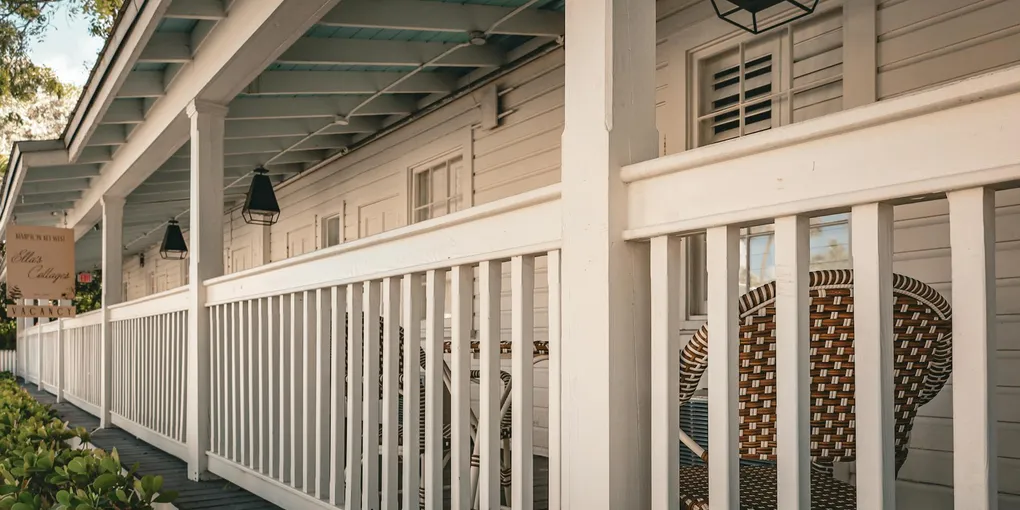
Fix a loose porch railing post: probe the base for rot (awl sinks = rot present). If sound wood: add through-bolts or a Simpson Strong-Tie post base bracket. If rotted: the post must be replaced. For loose balusters: re-nail or add a screw through the rail. Code requires railings to withstand 200 lbs of lateral force — a loose railing is a safety hazard. Fix before using the porch.
Frequently Asked Questions
Why does my porch railing feel wobbly?
Most wobbly railings have a loose post at the base. The post-to-floor connection weakens over time from: wood rot at the base where moisture collects, fasteners that have backed out due to wood shrinkage and expansion, or original installation with inadequate hardware (toe-nailed instead of through-bolted). Wobbly balusters are usually just loose screws or nails — easily fixed in 15 minutes.
How do I tighten a wobbly porch railing post?
If the post is sound (probe with an awl — solid wood resists penetration): add carriage bolts through the post into the porch framing below, or install a steel post base bracket (Simpson Strong-Tie) at the floor connection. If the post is rotted: the post must come out. Cut it flush at floor level, dig out or saw off the buried section, and install a new post with a proper base bracket set in concrete if needed.
Do I need a permit to fix a porch railing?
Repairing or reinforcing existing railing posts is typically maintenance and does not require a permit. Replacing multiple posts or the entire railing system may require a permit in some municipalities. New railing installations always need to meet current code (minimum 36 inch height for low decks, 42 inch for higher decks; balusters no more than 4 inches apart).
How much does porch railing repair cost?
DIY repair of a single loose post: $20-$60 in hardware (carriage bolts, post base bracket). Hiring a handyman for 1-2 posts: $100-$300 labor. Full porch railing replacement by a contractor: $800-$3,500 depending on length, material (wood, aluminum, vinyl, cable), and complexity.
Fix a loose porch railing post: probe the base for rot (awl sinks = rot present). If sound wood: add through-bolts or a Simpson Strong-Tie post base bracket.
A wobbly porch railing is more than an annoyance — it’s a safety hazard. Building codes in most jurisdictions require railings to resist a 200-pound lateral load, meaning they must stay firm when someone leans or pushes against them. A loose railing can give way suddenly, leading to a fall from a porch or deck. The good news is that most railing wobble problems are fixable in a few hours without replacing the entire railing system. This guide covers the most common causes and the most effective repairs.
Why Porch Railings Get Loose
Before picking a fix, you need to diagnose the problem. Railings fail at different points for different reasons.
Loose post base bolts. The most common cause of wobble is simply that the bolts or lag screws anchoring the post to the deck or concrete have loosened over time from repeated loading. This is often the easiest fix.
Rotten wood at the post base. If the post is set in or near concrete and moisture has accumulated at the base, the wood rots from the bottom up. The post looks fine from a distance but has no structural strength at its base.
Failed post-to-rail connection. The top and bottom rail attach to the posts with hardware, brackets, or direct fasteners. If these connections fail, the entire railing section moves as a unit even if the posts are still solid.
Loose or missing balusters. Individual balusters that are loose rarely cause structural wobble but are still a safety issue — especially if the gap creates a space wide enough for a child to pass through or get stuck. Building codes typically require baluster spacing of no more than 4 inches.
Concrete anchor failure. On concrete or masonry porches, posts are often anchored with wedge anchors, sleeve anchors, or expansion bolts. These can fail from corrosion, improper installation, or if the concrete around them has cracked.
What You Need
- Post Base Hardware (Surface-Mount Steel Post Base) — Simpson Strong-Tie ABA or similar
- Concrete Wedge Anchors — 1/2-inch diameter for post base anchoring into concrete
- Structural Lag Screws — heavy-duty lag bolts for wood deck post anchoring
- Wood Post Repair Epoxy (Rot Repair Kit) — consolidant and filler for minor rot repair at post base
- Baluster Connector Screws — hidden fasteners for tightening or replacing balusters
- Rotary Hammer Drill with Concrete Bit — for drilling anchor holes into concrete or masonry
Step 1: Diagnose Before You Fix
Spend five minutes with a systematic diagnosis before buying anything.
Test each post individually. Grab the post near the top and push it laterally — toward the yard and toward the house — and then side to side along the railing direction. Note which direction has the most give and which posts feel worst.
Look at the base. Get down and look at where each post meets the deck or concrete. Are there visible cracks in the wood? Is there black discoloration (mold and rot)? Are the bolts or hardware still there and tight? Probe the base of wood posts with a screwdriver — if it sinks in, you have rot.
Check the connections. Look at where the top and bottom rails connect to each post. Wiggle the rail — does it flex at the bracket connection, or does the post itself move? This distinction tells you whether you’re fixing the post anchor or the rail connections.
Check the balusters. Grab each baluster and wiggle it. Note any that are loose, spinning, or have visible cracks.
Fixing Loose Post Bolts on a Wood Deck
If the posts are solidly attached to a wood deck via lag bolts through a rim joist or decking, start here.
Tighten existing hardware. Using a socket wrench, tighten all lag bolts or carriage bolts at the post base. Don’t just spin them — put weight on the wrench and feel for genuine resistance. If bolts spin freely or feel like they’re in a stripped hole, tightening won’t help.
Add a through-bolt. If lag bolts have stripped their holes, the best upgrade is a 1/2-inch galvanized carriage bolt passed completely through the rim joist and post, with a washer and nut on both sides. Drill a pilot hole through both members, insert the bolt, and tighten until the washer seats firmly against the wood. This creates a much stronger connection than a lag bolt that relies on thread engagement alone.
Add a steel post base. For posts that are simply toe-nailed or attached with light hardware, retrofit a surface-mount post base. Simpson Strong-Tie makes bases designed for this purpose (like the ABA post base). The base bolts to the deck surface and cradles the post on three or four sides, dramatically improving lateral resistance. Drill pilot holes in the post base flanges and fasten with structural screws or bolts per the manufacturer’s table.
Fixing Posts on a Concrete Porch
Concrete anchoring requires different tools and hardware.
Inspect existing anchors. If the post is attached via a steel base plate and concrete anchors, check whether the anchors themselves are loose in the concrete or whether the bolts in the base plate are loose. Tap around the anchor with a hammer — a hollow sound indicates the concrete has cracked around the anchor.
Re-tighten expansion anchors. If the anchors are intact but the nuts are loose, tighten them. Expansion anchors (wedge anchors and sleeve anchors) expand against the concrete as the nut is tightened, so re-tightening often restores grip.
Replace failed anchors. If the concrete has cracked around an anchor and it’s moving in the hole, the anchor must be replaced. Remove the old anchor (this usually requires cutting it off or drilling it out), clean out the hole, and install a new wedge anchor in a new location offset by at least 6 inches from the failed anchor. For 4x4 posts, use 1/2-inch diameter wedge anchors that embed at least 2.5 inches into sound concrete.
For a new post base installation. Position the steel post base over the concrete surface, mark the anchor hole locations, and drill with a rotary hammer and carbide-tipped concrete bit. Drill at least 1/4 inch deeper than the anchor’s embedment length. Blow out the dust with compressed air, insert the wedge anchor, and tighten with a socket wrench. The anchor expands as it’s tightened. Install the base plate on the anchors, level it, and tighten the nuts.
Fixing Rot at the Post Base
Minor rot at the very base of a post can sometimes be repaired without replacing the post.
Assess the extent. If the rot is limited to the bottom 1–2 inches and doesn’t penetrate more than halfway through the post’s cross-section, a wood epoxy repair is viable. If the rot extends higher or is more than 50% through the post, replace the post.
Remove rotted wood. Use a chisel or oscillating tool to excavate all soft, discolored wood. Poke at the perimeter of the rot with an ice pick — remove wood until you reach solid material in all directions.
Apply wood consolidant. Products like LiquidWood or similar penetrating epoxy consolidants soak into soft wood fibers that are left behind after excavation and harden them. Brush on generously and let it fully absorb and cure — typically 24 hours.
Fill with epoxy wood filler. Two-part wood epoxy filler (like PC-Woody or Abatron WoodEpox) can be shaped into the cavity and worked to match the original post profile while still pliable. It cures hard and can be sanded, painted, and drilled. It’s not structural wood — it fills the cosmetic gap — but combined with the consolidant treatment, it restores the appearance and seals out future moisture.
Replacing Loose or Damaged Balusters
Balusters (the vertical spindles between posts) are typically attached at the top and bottom rails. They can be secured with nails, screws, hidden connectors, or adhesive.
Remove the failed baluster. If it’s nailed, use a pry bar gently to pull it free. If screwed from the outside, remove the screws. If attached with hidden connectors, consult the system’s instructions for removal.
Measure and cut a replacement. Match the existing baluster length exactly. Most railings use 2x2 or 1.5-inch square balusters in wood or composite. Match the material and profile.
Fasten the replacement. Bottom-rail attachment is typically through-screwed at an angle (toe-screw) or via a metal baluster connector. Top-rail attachment is similar. Angle the screws inward so they’re not visible from the front. For a clean look, use baluster connector clips that attach to the rail with screws and grip the baluster ends.
Check the spacing. After installing the new baluster, verify spacing is 4 inches or less on all sides of the new and adjacent balusters. Use a 4-inch block or spacer as a go/no-go gauge.
Testing Your Repair
After all repairs are complete, test each post by applying a firm lateral push — the kind of force you’d get from a person leaning on the rail. The railing should feel solid with minimal give. Code requires the railing to resist 200 pounds of lateral force, which you can approximate by pushing firmly with both hands.
Walk the length of the railing and check each baluster is tight. Look for any gaps in the spacing. Inspect hardware visually to confirm everything is fastened correctly.
Frequently Asked Questions
-
question: “How much does it cost to fix a wobbly porch railing?” answer: “DIY repairs typically cost $30–$150 in materials depending on the fix. Re-tightening bolts costs almost nothing. Installing new steel post bases runs $15–$40 per post. Replacing posts on a concrete porch with new anchors and bases runs $50–$80 per post in materials. A professional contractor typically charges $150–$400 for a single-post repair including labor.”
-
question: “Can I replace one post in a railing system without replacing the whole railing?” answer: “Yes, in most cases. Removing a single post requires unscrewing or unbolting the top and bottom rails from it, removing the post base hardware, extracting the old post, and installing a new post in its place before reattaching the rails. Match the post dimensions and material exactly to maintain a consistent look.”
-
question: “What is the building code requirement for porch railing height?” answer: “Most building codes (including the International Residential Code) require railings on surfaces 30 inches or more above grade to be at least 36 inches high. Decks more than 30 inches above grade that serve dwellings with more than two stories may require 42-inch railings. Always check your local jurisdiction — some municipalities have stricter requirements.”
-
question: “How do I anchor a post base into old or cracked concrete?” answer: “Cracked concrete around old anchors is not reliable for re-anchoring in the same location. Move to a new location at least 6 inches away from the crack. If the concrete itself is significantly deteriorated, you may need to cut out and repour a section before anchoring. Use wedge anchors rated for cracked concrete in questionable conditions.”
-
question: “My wood porch posts are painted and look fine, but they feel wobbly. Where should I look first?” answer: “Look at the base connection hardware first — this is responsible for the majority of post wobble. Even if the post looks solid, if the bolts have loosened or corroded, the post has no resistance to lateral movement. Tap along the post base with a screwdriver handle and listen for hollow sounds that indicate rot inside paint.”
-
question: “Is it safe to use a wobbly railing temporarily while planning the repair?” answer: “It depends on the severity. A railing that moves slightly when pushed but feels firm under normal use is different from one that lurches when you put weight on it. If the railing is on a surface more than 30 inches above grade and has significant movement, it should be repaired or taken out of service immediately. Don’t allow children to use a surface with a compromised railing.”
Related Reading
- How to Build a Deck From Scratch
- How to Fix a Rotted Deck Joist
- Spring Home Maintenance Checklist
- How Much Does a Handyman Cost?
- Diagnose Before You Fix
Spend five minutes with a systematic diagnosis before buying anything.
- Fixing Loose Post Bolts on a Wood Deck
If the posts are solidly attached to a wood deck via lag bolts through a rim joist or decking, start here.
- Fixing Posts on a Concrete Porch
Concrete anchoring requires different tools and hardware.
- Fixing Rot at the Post Base
Minor rot at the very base of a post can sometimes be repaired without replacing the post.
- Replacing Loose or Damaged Balusters
Balusters (the vertical spindles between posts) are typically attached at the top and bottom rails. They can be secured with nails, screws, hidden connectors, or adhesive.
- Testing Your Repair
After all repairs are complete, test each post by applying a firm lateral push — the kind of force you'd get from a person leaning on the rail. The railing should feel solid with minimal give.
Free: 10-Point Home Maintenance Checklist
Prevent costly repairs with this seasonal checklist. Save hundreds every year by catching problems early.
Your checklist is ready!
Open Checklist →Something went wrong. View the checklist here.