How to Fix a Patio Umbrella Base That Tips in 15 Minutes
Fix a tippy patio umbrella base in 15 minutes: fill with sand or water (free), patch cracks with epoxy ($8), or upgrade to a weighted cross base. No tools needed.
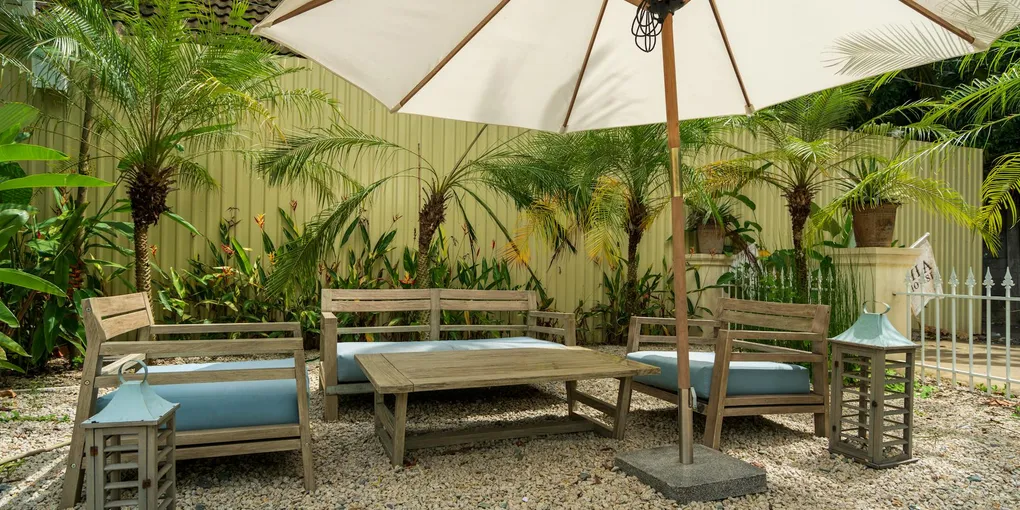
A patio umbrella is a warm-weather essential — until the base gives out.
A patio umbrella is a warm-weather essential — until the base gives out. Whether it is a cracked plastic shell, a wobbly pole connection, a base that tips over in every breeze, or simply a hollow stand that never had enough weight to hold the umbrella securely, most umbrella base problems are fixable without buying a brand new stand.
This guide covers the full range of repairs: patching a cracked base, adding weight with sand or water fill, fixing a loose pole socket, and anchoring the base to a deck for permanent stability.
What You Need
Depending on your repair, you will need a subset of these:
- Play sand or all-purpose sand for umbrella base fill — the best weight-adding fill material; does not freeze or evaporate
- Plastic bonding epoxy for outdoor use — for hairline cracks in the base shell
- Foam pipe insulation 1.5 inch — cuts to fill gaps between a loose pole and the base socket
- Replacement umbrella base stand — weighted — if the base is too damaged to repair
- Funnel for filling sand into fill ports
- Hex key set (for tightening set screws)
- Drill and bits (for adding mounting holes)
Step 1: Identify the Failure Mode
Walk through what the base is actually failing at. The repair is different depending on the root cause.
Not heavy enough — tips over in wind. The base is structurally sound but under-weighted for the umbrella size. Fix: add weight through fill ports or supplemental ballast.
Cracked plastic shell. The outer body of the base has cracked from UV exposure, impacts, or freeze-thaw cycles. Fix: patch small cracks with epoxy; replace severely cracked bases.
Loose pole — wobbles in the socket. The clamping mechanism is worn or the pole is smaller than the socket. Fix: tighten the set screw, replace the clamp ring, or add pole insulation filler.
Base slides or moves on deck. No physical damage, but the base drifts under wind load. Fix: add anti-slip pads, fill with more weight, or anchor to the deck.
Step 2: Add Weight to a Hollow Base
Most plastic and decorative umbrella bases are sold hollow or partially filled. They depend on user-added fill weight to be stable. Filling the base is the single most impactful improvement you can make to a tippy umbrella.
Locate the fill port. Most hollow bases have a threaded plug on the top or side. Unscrew it with your hand or a coin to expose the fill hole.
Fill with dry sand. Use a funnel to pour play sand or all-purpose sand into the fill port. Tap the base firmly after every few cups to settle the sand and eliminate air pockets — sand packs significantly more per volume when settled. Fill until no more sand will fit and the port is nearly overflowing. Replace the plug tightly.
Calculate how much weight you added. A gallon of sand weighs approximately 12 to 13 pounds. Knowing the volume of your base (check the manufacturer specs if available) helps you estimate whether you have reached the target weight for your umbrella size.
Alternative: water fill. If you are in a warm climate with no freeze risk, water is convenient. Use a funnel or hose to fill through the plug port. Note that water evaporates over time from small port gaps and must be periodically refilled. In any climate below freezing, water expansion will crack even thick plastic bases — use sand instead.
Adding external ballast. If the base has no fill port or is already full, add weight externally. Weight rings designed for umbrella bases stack around the pole and add 10 to 40 pounds each. Alternatively, a cinderblock placed inconspicuously behind the base or a large planter filled with soil positioned near the base adds effective ground-level ballast.
Step 3: Patch a Cracked Base Shell
For hairline or moderate cracks that have not reached the structural pole socket or mounting feet, epoxy repair stabilizes the crack and prevents water infiltration.
Clean the crack. Use rubbing alcohol or acetone on a rag to degrease the crack area. Remove any dirt, mold, or chalky oxidation with a stiff brush. Let it dry completely.
Apply plastic-bonding epoxy. Mix the two-part epoxy per the package instructions. Force it into the crack using a putty knife or toothpick, working it into the full depth of the crack. Smooth the surface and remove excess before it begins to set.
Let it cure fully. Two-part epoxy typically reaches handling strength in 30 to 60 minutes but full strength in 24 hours. Do not flex or stress the repair during that time.
For larger cracks, apply a fiberglass repair patch over the epoxy while it is still tacky. The fiberglass cloth reinforces the patch and significantly improves its ability to resist the stress that caused the original crack.
Repaint the patched area with outdoor spray paint matched to the base color if aesthetics matter.
Step 4: Fix a Loose Pole in the Socket
A pole that wobbles in the base causes stress on the umbrella frame, produces annoying movement in light wind, and can allow the umbrella to topple at the socket even with a heavy base.
Tighten the set screw. Most bases have a set screw that, when tightened, bears against the pole to clamp it. Locate the set screw (usually on the side of the pole socket) and tighten it with the appropriate hex key (usually 4mm or 5mm). If the set screw hole is stripped, drill a new hole 90 degrees away in the socket using a drill bit slightly smaller than the set screw diameter, and install a new screw.
Replace the clamp ring. Some bases use a threaded hand-clamp ring at the top of the socket. If the ring is cracked or its internal threads are stripped, it cannot generate clamping force. Replacement clamp rings are sold at outdoor furniture retailers and home improvement stores — measure the socket outer diameter to find the right replacement.
Fill pole gap with foam insulation. If your pole is smaller than the base socket — common when mixing pole sizes or using a replacement umbrella — wrap the pole with self-adhesive foam pipe insulation cut to the socket depth. The foam compresses to fill the gap and cushions the pole against the socket walls, eliminating wobble without drilling.
Step 5: Anchor the Base to the Deck
For maximum stability — especially for large or cantilever umbrellas in windy areas — anchoring the base to the deck structure is the best solution.
Check if your base has mounting holes. Many heavy-duty bases have pre-drilled holes in the base plate for exactly this purpose. Position the base, mark the hole locations on the deck, drill pilot holes, and drive stainless steel lag screws or bolts through the base and into the deck boards (and ideally into the joists below).
Use mounting plate brackets. If your base has no holes, screw-down mounting brackets for umbrella bases are available. These L-shaped metal brackets fasten to the deck and wrap over the base edges to prevent lifting without modifying the base itself.
Anchor to the table. If your dining table has a center umbrella hole, the table’s own weight adds significant stability. Position the base under the table with the pole running through the table hole, and add table clips that secure the umbrella shaft to the table edge — the table mass helps resist tipping.
When to Replace Instead of Repair
Replace the base when: structural cracks have reached the pole socket, the base feet have broken off (removing the stable footprint), the internal pole clamping mechanism is completely failed with no replacement parts available, or the base weighs so little that even a fully filled replacement would be more cost-effective.
When shopping for a replacement, buy more weight than you think you need — look for bases rated at least 50 lbs for standard 9-foot market umbrellas, and 75 to 100 lbs for larger 11-foot umbrellas.
Related Reading
- Identify the Failure Mode
Walk through what the base is actually failing at. The repair is different depending on the root cause.
- Add Weight to a Hollow Base
Most plastic and decorative umbrella bases are sold hollow or partially filled. They depend on user-added fill weight to be stable. Filling the base is the single most impactful improvement you can make to a tippy umbrella.
- Patch a Cracked Base Shell
For hairline or moderate cracks that have not reached the structural pole socket or mounting feet, epoxy repair stabilizes the crack and prevents water infiltration.
- Fix a Loose Pole in the Socket
A pole that wobbles in the base causes stress on the umbrella frame, produces annoying movement in light wind, and can allow the umbrella to topple at the socket even with a heavy base.
- Anchor the Base to the Deck
For maximum stability — especially for large or cantilever umbrellas in windy areas — anchoring the base to the deck structure is the best solution.
Free: 10-Point Home Maintenance Checklist
Prevent costly repairs with this seasonal checklist. Save hundreds every year by catching problems early.
Your checklist is ready!
Open Checklist →Something went wrong. View the checklist here.