How to Fix a Fence Gate That Sags, Drags, or Won't Latch (2026)
A fence gate that sags, drags on the ground, or won't latch is almost always a hinge or post problem — not the gate itself. This guide covers anti-sag kits, hinge replacement, latch alignment, and post repair so you can fix your gate in an afternoon.
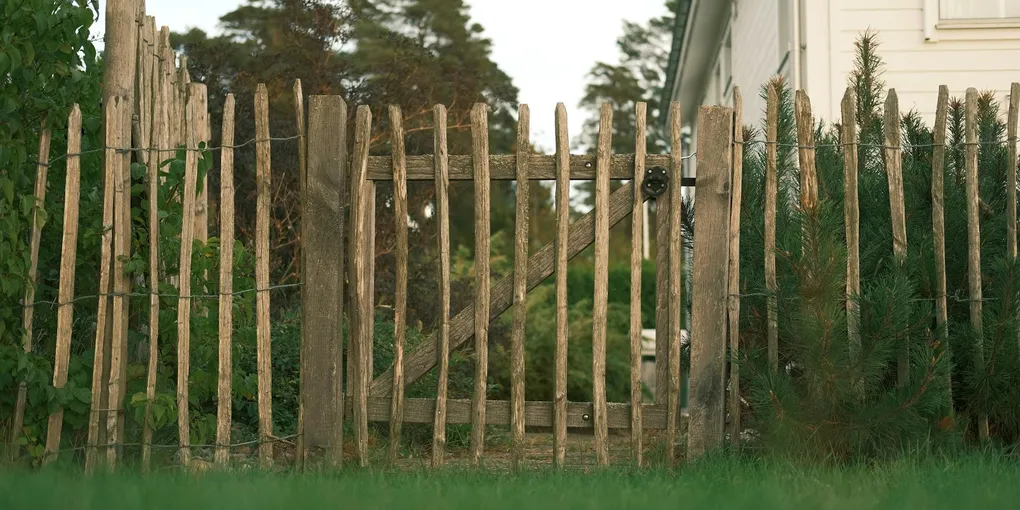
Fence gate repairs: (1) Sagging gate — install an anti-sag cable-and-turnbuckle kit diagonally from the top-hinge corner to the bottom-latch corner. Tightening the turnbuckle pulls the low corner up. Cost: $15–$25. (2) Dragging gate — adjust or replace the hinges, or shim the hinge-side post if it has leaned. (3) Latch won't reach — the gate has shifted; adjust the latch striker plate or add a gate latch extender. (4) Leaning post — the most serious issue, requiring post repair or replacement.
Frequently Asked Questions
How does an anti-sag gate kit work and how do I install one?
An anti-sag kit uses a steel cable (or rod) and a turnbuckle to create a diagonal tension brace inside the gate frame. The cable runs from the top corner on the hinge side to the bottom corner on the latch side. As a wood gate absorbs moisture and the hinges load with time, the gate frame parallelograms — the latch-side bottom corner drops. Tightening the turnbuckle pulls that corner back up by tensioning the diagonal cable. Installation: (1) Attach the top bracket to the top-hinge corner of the gate frame (inside face). (2) Attach the bottom bracket to the bottom-latch corner. (3) Thread the cable or rod through both brackets and attach to the turnbuckle. (4) Tighten the turnbuckle clockwise until the gate hangs square and the bottom clears the ground evenly. Check with a level. The entire installation takes about 30 minutes with basic tools.
How do I fix gate hinges that are pulling out or bent?
Hinge failure is the second most common gate problem. There are three typical scenarios: (1) Hinge screws are pulling out of the wood post — the wood around the screws has deteriorated or the screws were too small for a heavy gate. Solution: remove the hinge, fill the screw holes with epoxy wood filler or toothpicks and wood glue, let cure, and reinstall with longer, larger-diameter screws (3-inch minimum for gate hinges). For a permanent fix, use through-bolts with washers and nuts instead of screws. (2) The hinge itself is bent — a gate that swings too far and is repeatedly slammed bends hinge knuckles over time. Replace with heavier-duty hinges rated for the gate weight. (3) The hinge pin is worn — the pin wears oval in the barrel over years, causing slop that allows the gate to sag. Replace the hinge pair; they are inexpensive ($8–$20 per pair for standard wood fence hinges).
How do I align a gate latch that no longer reaches the strike?
When a gate sags or the post leans, the latch bolt no longer lines up with the strike plate or keeper. There are three fixes depending on severity: (1) Adjustable latch — many modern gate latches have an adjustable striker or are designed to engage across a range of positions. Loosen the striker screws and shift the striker up, down, or outward until the latch engages. (2) Relocate the striker — for a gate that has sagged significantly, unscrew the existing striker plate and move it to a new position that aligns with the latch bolt. Use new screw holes at least 1 inch from the old ones. Fill old holes with epoxy or wood filler first. (3) Add a latch extender or replace with an adjustable latch — if the latch bolt is 1/2 inch or more out of alignment horizontally, a latch extender plate mounted behind the striker can bridge the gap. Or replace the entire latch mechanism with a longer-throw or adjustable model ($15–$30) that accommodates the misalignment.
How do I check if the gate post is leaning and what do I do about it?
A leaning post is the root cause of many recurring gate problems. Even a 1-inch lean at the top of a 4-foot post creates significant hinge stress and gate misalignment. To check: hold a level against the post on two faces (perpendicular directions). A plumb post shows center bubble in both directions. Remedies depend on severity: (1) Minor lean (up to 1 inch at top) — dig out soil on the high side, install a concrete collar or tamp gravel, and brace the post plumb until set. (2) Significant lean (post has rotted at the base) — the post must be replaced. Sister a new post alongside the old one by digging a new hole adjacent to it and setting a new post in concrete; attach the gate to the new post and remove the old one. Or use a post repair spike: drive a galvanized steel spike into the ground alongside the rotted post and bolt them together — faster than full replacement and effective if the above-ground post is sound. (3) Concrete-set posts that have heaved — use a post puller or strap and vehicle to remove the entire concrete footing, then reset.
My gate swings open on its own or won't stay closed without the latch. How do I fix that?
A gate that swings open on its own is not plumb — it is either tilting toward the latch side or the hinges are angled so gravity pulls the gate open. Fixes: (1) Plumb the gate and post — use a level on the post and shim or adjust the post so it is plumb. A post that leans toward the yard causes the gate to swing open. (2) Adjust hinge angles — on strap hinges or heavy-duty gate hinges with adjustable positioning, angle the hinge barrel slightly so the gate is self-closing under gravity rather than self-opening. (3) Install a spring-loaded hinge — one of the two hinges is replaced with a spring hinge that automatically returns the gate to closed. Spring hinges are available for wood fence gates for $15–$30 and are the easiest solution for a gate that must remain closed (pet containment, pool gates). (4) Install a gate stop — a rubber or metal bumper mounted on the fence post or frame that the gate rests against when closed, preventing swing-through that could damage hinges.
How long should a wood fence gate last and when should I replace it instead of repairing it?
A well-built wood fence gate lasts 15–25 years with regular maintenance. Individual repairs (hinges, latches, anti-sag kit) extend the life significantly at low cost. Replace the gate rather than repair when: (1) Multiple boards are rotted, split, or missing — when the gate frame or boards are structurally compromised, no amount of hardware repair keeps the gate functional. (2) The gate frame is warped beyond correction — severe warping from water damage prevents the gate from ever closing flat against the post. (3) Accumulated repairs cost more than a new gate — standard wood fence gates range from $50 (boards-and-frame, DIY built) to $300+ (pre-hung wood or vinyl). If you are spending $150 on parts for a gate with rotted wood, buying new is better economics. (4) The fence itself is being replaced — replace the gate at the same time for consistent appearance and longevity.
Fence gate repairs: (1) Sagging gate — install an anti-sag cable-and-turnbuckle kit diagonally from the top-hinge corner to the bottom-latch corner. Tightening the turnbuckle pulls the low corner up.
Most fence gate problems come down to a handful of repairable issues — and fixing them yourself costs a fraction of a fence contractor visit.
What You Need
- Anti-sag gate kit with turnbuckle — the fastest fix for a sagging or dragging gate; $15–$25
- Heavy-duty gate hinges — replace bent or undersized hinges with properly rated hardware
- Adjustable gate latch — accommodates misalignment without relocating the striker
- Post repair spike kit — for stabilizing a leaning post without full post replacement
- 3-inch exterior wood screws — longer screws for rehinging into compromised post wood
- Through-bolt hardware kit — carriage bolts, washers, and nuts for a permanent hinge attachment that will not pull out
Step 1: Diagnose the Gate Problem
Before buying parts, spend five minutes identifying the actual problem. The repair is different depending on what you find.
Check the post first:
Hold a level against the hinge-side post. Is it plumb (bubble centered) in both directions? A leaning post causes every other problem — fixing hinges and latches on a leaning post is a temporary fix.
Check the gate frame:
Open the gate 90 degrees and look at the frame corner-to-corner. Is it square, or has it parallelogramed (the latch corner has dropped relative to the hinge corner)? A parallelogramed gate needs an anti-sag kit.
Check the hinges:
Are the hinge screws pulling out of the wood? Is the hinge barrel bent? Is there excessive slop (play) in the hinge pin? Any of these cause sagging.
Check the latch:
With the gate held plumb by hand, does the latch bolt align with the striker? If yes, the gate just needs to be squared up. If no, the latch or striker needs adjustment or the post has moved.
Step 2: Install an Anti-Sag Kit
If the gate frame has parallelogramed (latch corner dropped), an anti-sag cable-and-turnbuckle kit is the fastest and most effective fix.
The kit installs in 30 minutes and costs $15–$25.
Installation:
- Open the gate and prop it open at a 90-degree angle.
- Attach the top corner bracket to the inside face of the gate frame at the top-hinge corner. Use the included screws or substitute 2.5-inch exterior screws for better holding power.
- Attach the bottom corner bracket to the inside face of the gate frame at the bottom-latch corner.
- Thread the cable through both brackets and connect it to the turnbuckle.
- Begin tightening the turnbuckle (turn clockwise on the barrel to shorten the cable). Watch the bottom-latch corner — it will begin to rise.
- Tighten until the gate bottom is parallel to the ground and the latch side aligns with the striker.
- Check with a level. Close the gate and test the latch.
The turnbuckle can be readjusted seasonally if the gate shifts with temperature and humidity changes.
Step 3: Replace or Repair the Hinges
If the hinges are bent, the screws are pulling out, or there is excessive slop in the hinge pins, repair or replacement is needed.
Screws pulling out:
- Remove the gate from the hinges (have a helper hold the gate).
- Remove the hinge from the post.
- Inspect the screw holes — if the wood is soft or the holes are stripped, fill them.
- For stripped holes: inject wood glue and insert wooden toothpicks or dowel pieces. Let dry for two hours. Trim flush.
- Reinstall the hinge with 3-inch exterior screws. For a heavy gate (over 50 lbs), use through-bolts: drill completely through the post, insert a carriage bolt, and secure from the back with a washer and nut. Through-bolts will not pull out.
Replacing bent hinges:
Choose hinges rated for your gate’s weight — a 40-lb wood gate needs heavy-duty hinges rated for 50–75 lbs minimum. Strap hinges (the long flat type) provide more bearing surface and are appropriate for heavy gates. Butt hinges (residential door style) are suitable for lightweight gates only.
When rehinging, check that the hinge barrels are perfectly aligned vertically. Misaligned hinge barrels bind the gate and cause premature wear.
Step 4: Adjust or Replace the Latch
Once the gate hangs properly (squared up, hinges solid), check latch alignment.
Close the gate slowly. Watch whether the latch bolt meets the striker plate squarely:
- Vertical misalignment (latch bolt hits above or below the striker opening): loosen the striker screws and slide the striker up or down until it aligns. Re-tighten.
- Horizontal misalignment (latch bolt cannot reach the striker, or overshoots): If the gate sags when you release it but was aligned when you held it up, the hinges need attention (Step 3). If the post itself has moved away from the gate, add a latch extender plate behind the striker to bridge the gap, or install an adjustable latch mechanism.
- Latch handle stiff or broken: Replace the entire latch mechanism. Basic gravity latches cost $8–$15; adjustable or lockable models run $20–$40.
Step 5: Stabilize a Leaning Post
If the hinge post leans more than 1/2 inch out of plumb over its height, all other repairs are temporary until the post is addressed.
Post repair spike method (fastest fix):
- Purchase a steel post repair spike — a pointed steel sleeve that drives into the ground alongside the post.
- Drive the spike into the ground 6–8 inches from the existing post using a sledgehammer.
- Plumb the existing post (brace it with stakes and lumber to hold it plumb).
- Bolt the spike to the post with included hardware.
- Remove the braces once the repair spike is secured.
This method works well when the existing post is sound above ground but has rotted below grade or the concrete footing has heaved.
Full post replacement:
If the post is rotted throughout or the repair spike cannot stabilize it, full replacement is needed. This involves digging out the existing post and concrete footing, setting a new pressure-treated post (4x4 or 6x6 minimum for gate posts), and pouring new concrete. Set the post in a tube form with concrete and brace it plumb until the concrete cures (48 hours minimum before hanging the gate).
Step 6: Seal and Maintain
Once the gate is repaired, protect it to prevent the same problems from recurring:
- Apply exterior wood sealer or stain to all exposed surfaces, including the bottom end grain of boards — the bottom of a gate absorbs the most moisture and rots first.
- Ensure the gate bottom clears the ground by at least 2 inches to prevent rot from soil contact.
- Lubricate hinge pins and latch mechanisms annually with a spray lubricant.
- Inspect and retighten hinge screws each spring — one loose screw allowed to stay loose leads to more screws pulling out.
Related Reading
- Fence Installation Cost — full fence replacement costs if the gate damage extends to fence panels
- How to Install a Fence — building a new gate alongside a new fence
- Annual Home Maintenance Schedule — seasonal gate and fence inspection checklist
- How to Fix a Broken Fence Gate Latch — repair or replace the latch hardware once the gate frame is aligned
- Diagnose the gate problem
Check the post with a level on two faces to confirm it's plumb. Open and close the gate to identify whether it drags at the bottom (sagging frame), fails to latch (latch misalignment), or swings open on its own (plumb issue). The post condition determines the repair scope.
- Install an anti-sag cable kit
Attach the top bracket at the hinge-side top corner of the gate frame and the bottom bracket at the latch-side bottom corner. Thread the cable or rod through both brackets and connect to the turnbuckle. Tighten the turnbuckle clockwise until the gate hangs square and clears the ground evenly.
- Replace or repair the hinges
For screws pulling out: remove the hinge, fill holes with epoxy filler or toothpicks and wood glue, let cure, reinstall with 3-inch minimum screws. For bent hinges: replace with heavy-duty hinges rated for the gate weight. Use through-bolts with washers and nuts for a permanent fix.
- Adjust or replace the latch
Loosen the striker screws and shift it up, down, or outward until the latch bolt engages cleanly. If the gate has shifted significantly, relocate the striker plate to new screw holes at least 1 inch from the old ones. Fill old holes with epoxy or wood filler first.
- Stabilize a leaning post
Drive a metal post repair spike (E-Z Mender or similar) 12-18 inches into the ground adjacent to the leaning post using a sledgehammer. Pull the post plumb, then drill pilot holes and drive lag screws through the spike into the post. This avoids full excavation when the above-ground post is still sound.
Free: 10-Point Home Maintenance Checklist
Prevent costly repairs with this seasonal checklist. Save hundreds every year by catching problems early.
Your checklist is ready!
Open Checklist →Something went wrong. View the checklist here.