How to Fix a Broken Door Closer
Diagnose and fix a door closer that slams, won't latch, or leaks fluid — including adjustment, fluid replenishment, and full replacement.
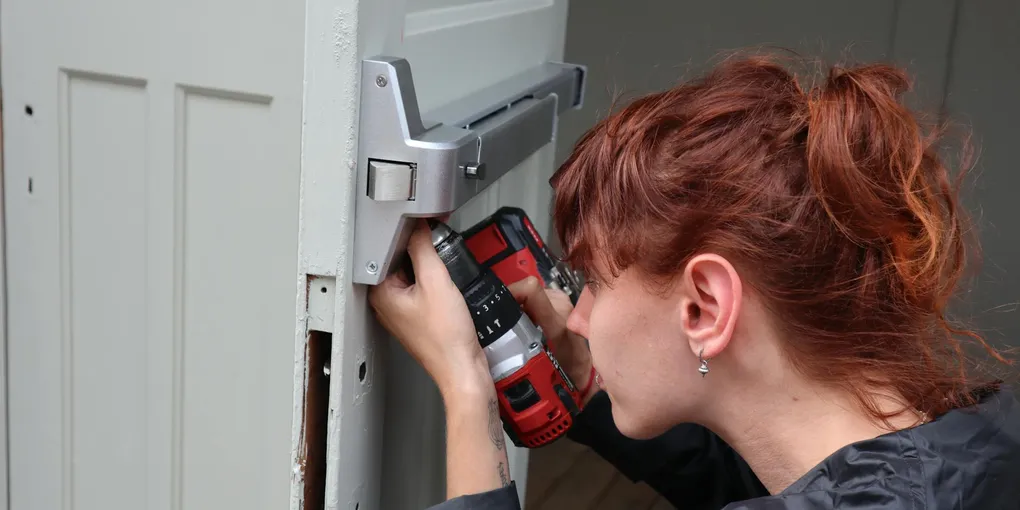
Fixing a door closer: (1) Door slams shut: find the closing speed adjustment screw on the closer body (usually marked S or C) and turn clockwise to slow it down. The latch speed screw (L) controls the final pull. Adjust in small quarter-turns. (2) Door won't fully close or latch: increase the closing speed, or adjust the latch speed screw to ensure the last few inches of travel have enough force. (3) Door closer leaking fluid: the seals are worn — this can't be repaired. Replace the closer. (4) Closer arm bent or broken: replace the arm only — arms are sold separately. Match the brand and arm type (standard, parallel, or top jamb). (5) Full closer replacement: note the swing direction (pull or push) and the mounting location (top jamb or surface mount). A new commercial closer costs $25 to $75. Most residential closers use the same hole pattern for direct replacement.
Frequently Asked Questions
Why does my door closer slam the door shut?
Slamming usually means the closing speed valve is set too fast. Locate the adjustment screws on the body of the closer — typically labeled S or C for sweep speed — and turn the screw clockwise in small increments to slow the closing speed.
Why won't my door latch all the way when using a door closer?
The latch speed valve, sometimes labeled L or LC, controls how fast the door moves in the final few inches before closing. If it is too slow, the door loses momentum and fails to latch. Adjust the latch speed screw counterclockwise to increase speed in that final zone.
Can I fix a door closer that is leaking hydraulic fluid?
A minor seep around the adjustment screws can sometimes be stopped by tightening the screws or adding a drop of hydraulic oil to re-seat the seal. A closer with a crack in the body or major leak is beyond repair and needs replacement.
How long do door closers last?
A quality commercial door closer can last 20–30 years with occasional adjustment. Residential-grade closers on high-traffic doors may need replacement in 10–15 years. Consistent slamming and improper adjustment shorten lifespan significantly.
Do I need special tools to adjust a door closer?
Usually just a flathead screwdriver or small Allen key (hex wrench). The adjustment screws are typically slotted or hex socket. Always make small adjustments — a quarter turn at a time — and test the door after each change.
What size door closer do I need for a replacement?
Door closers are rated by door width and weight. Most residential and light commercial doors need a size 1–3 closer. Heavy or wide doors (over 36 inches or solid core) need a size 4–6. Check the closer body for a size marking or consult the manufacturer.
Fixing a door closer: (1) Door slams shut: find the closing speed adjustment screw on the closer body (usually marked S or C) and turn clockwise to slow it down. The latch speed screw (L) controls the final pull.
A door closer that slams, drifts open, or won’t latch is both annoying and a potential safety issue. The good news is that most door closer problems can be solved in under 30 minutes with nothing more than a screwdriver — no replacement required. This guide walks you through diagnosis, adjustment, and replacement when needed.
Understanding How a Door Closer Works
A door closer uses a hydraulic cylinder and a coiled spring to control how fast a door opens and closes. Inside the body, adjustable valves control:
- Sweep speed — how fast the door moves from fully open to about 10–15 degrees from closed
- Latch speed — how fast the door moves in the final few degrees to latch
- Back-check — resistance when the door is opened too forcefully (prevents wall damage)
All three are adjustable without tools other than a flathead or Allen key.
Step 1: Identify the Problem
Watch the door cycle and note the symptom:
| Symptom | Likely Cause |
|---|---|
| Door slams hard | Sweep speed too fast |
| Door bounces back open | Latch speed too slow or latch strike misaligned |
| Door drifts open slowly | Spring tension too low or arm binding |
| Door drags and is hard to open | Back-check too tight or spring tension too high |
| Oil visible on or below closer body | Hydraulic fluid leak |
Step 2: Locate the Adjustment Screws
Look at the end of the closer body opposite the arm attachment. You will typically see two or three slotted or hex screws recessed into the housing. They are usually labeled:
- S or C = sweep/closing speed
- L or LC = latch speed
- BC = back-check
If there are no labels, consult the closer manufacturer’s documentation. Common brands like LCN, Dorma, and Norton follow standard conventions. A replacement closer like the LCN 1461 Series Door Closer on Amazon includes a full adjustment guide.
Step 3: Adjust Speed Valves
To slow a slamming door: Turn the sweep speed screw clockwise by a quarter turn. Open and close the door. Repeat until the door closes at a comfortable pace without slamming.
To fix a door that won’t latch: Turn the latch speed screw counterclockwise by a quarter turn. This increases speed in the final zone, giving the door enough momentum to engage the latch. Test and repeat as needed.
Never open a valve more than two full turns from its fully closed position — over-opening can cause the screw to fall out and fluid to leak.
Step 4: Adjust Spring Tension
If the door drifts open or requires excessive force to open, the spring tension needs adjusting. On most closers, this is done by repositioning the arm bracket to a different hole on the door or frame plate, or by using a power adjustment screw if one is present. Consult your closer’s template sheet for the correct hole positions for your door width.
Step 5: Check the Arm and Mounting
A door that still misbehaves after valve adjustment may have a bent or loose arm. Inspect the arm and its two pivot points:
- Tighten all screws on the closer body, door plate, and frame bracket.
- Look for cracks or bends in the arm links — a cracked arm cannot be repaired and must be replaced.
- Confirm the arm is not rubbing on the door frame or weather stripping as it sweeps.
Replacing the Door Closer
If the closer is leaking, has a cracked body, or is simply worn out after many years, replacement is straightforward.
- Remove the old closer by unscrewing the body from the door and the bracket from the frame. Note all measurements before removing — door width, hinge side, and swing direction (pull or push).
- Choose a replacement rated for your door size and application. For standard residential doors, a Tell Manufacturing Pneumatic Door Closer on Amazon is an affordable option with simple screw adjustments.
- Mount the body to the door face following the template included with the new closer. Use the pre-drilled holes where possible to avoid new fastener placement.
- Attach the frame bracket and connect the arm. The arm should be slightly angled when the door is in the closed position — parallel arms indicate incorrect positioning.
- Adjust the valves starting from the factory default settings, then fine-tune as described above.
Tips for Long-Term Performance
- Lubricate the arm pivots annually with a drop of 3-in-1 oil or white lithium grease to prevent binding and squeaking.
- Check mounting screws each year — vibration from heavy use can loosen them over time.
- Keep the closer body clean — paint buildup or grime around the valves can make adjustment difficult.
- Do not prop the door open against the closer’s range — forcing a door past its maximum opening position damages the arm and the spring inside the body.
With a few careful adjustments, most door closer problems are solved in minutes — no contractor required.
Related Reading
- How to Fix a Broken Screen Door — repair the screen portion of a combination storm-and-screen door while you have the door hardware out
- How to Install a Storm Door — install the storm door that the closer mounts on
- How to Fix a Broken Storm Door Closer — repair or replace the closer on a storm door specifically
- Identify the Problem
Watch the door cycle and note the symptom:
- Locate the Adjustment Screws
Look at the end of the closer body opposite the arm attachment. You will typically see two or three slotted or hex screws recessed into the housing. They are usually labeled:
- Adjust Speed Valves
To slow a slamming door: Turn the sweep speed screw clockwise by a quarter turn. Open and close the door. Repeat until the door closes at a comfortable pace without slamming.
- Adjust Spring Tension
If the door drifts open or requires excessive force to open, the spring tension needs adjusting. On most closers, this is done by repositioning the arm bracket to a different hole on the door or frame plate, or by using a power adjustment screw if on...
- Check the Arm and Mounting
A door that still misbehaves after valve adjustment may have a bent or loose arm. Inspect the arm and its two pivot points:
Free: 10-Point Home Maintenance Checklist
Prevent costly repairs with this seasonal checklist. Save hundreds every year by catching problems early.
Your checklist is ready!
Open Checklist →Something went wrong. View the checklist here.