How to Clean Windows Without Streaks (Squeegee Method)
How to clean windows streak-free using the professional squeegee method, plus screen cleaning, track cleaning, and the DIY solution that outperforms Windex. Covers interior and exterior windows.
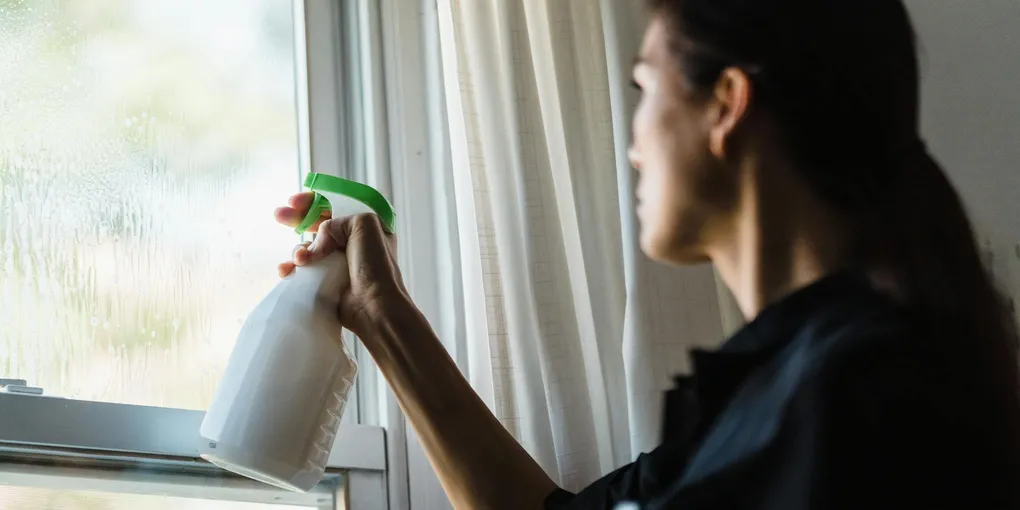
Clean windows streak-free by using a squeegee instead of paper towels. Mix 1 gallon of warm water + 1 tablespoon dish soap in a bucket, dip a microfiber cloth or scrubber, wet the window, then pull a squeegee from top to bottom in overlapping S-shape strokes, wiping the blade between strokes. Finish edges with a dry microfiber cloth. For light dust and touch-ups, a 1:1 mix of distilled vinegar and water in a spray bottle works with a microfiber cloth. Skip paper towels — they leave streaks and lint. Clean windows 2-3 times per year exterior, quarterly interior. Total time for a typical home: 2-4 hours.
Frequently Asked Questions
What's the best window cleaner?
The professional window-cleaning industry standard is 1 tablespoon dish soap (Dawn works great) per gallon of warm water. It's cheaper, more effective, and less streaky than Windex or commercial window cleaner. For touch-ups and daily smudges, a 1:1 distilled vinegar + water mix in a spray bottle beats commercial products on mineral deposits. Windex works fine for light cleaning; it's just no better than DIY and costs 10x more.
Why do my windows always streak?
Four main causes: (1) using paper towels instead of a squeegee or microfiber cloth — paper leaves lint and streaks; (2) cleaning in direct sunlight — cleaner dries before you can wipe it away; (3) using too much cleaner — residue needs thorough drying; (4) dirty squeegee blade — any debris stuck to it transfers streaks. Pros use a squeegee, wipe the blade between each stroke, and never clean windows in direct sun.
Should I use a squeegee or paper towels?
Squeegee for anything larger than a picture frame. Paper towels for small mirrors or tiny windows. For medium-to-large windows, a [squeegee and microfiber combo](https://www.amazon.com/s?k=professional+squeegee+window+cleaning+kit&tag=fixupfirst-20) outperforms paper towels in every measurable way — streak-free results, faster, no lint, reusable. A $15 squeegee pays for itself in one cleaning.
Can I clean windows in winter?
Yes, with the right mix. Add 1 cup of rubbing alcohol or windshield washer fluid (the kind with antifreeze) to your cleaning solution. The alcohol lowers the freezing point and evaporates quickly, preventing freeze-streak. Don't clean windows when temperatures are below 25°F — cleaner freezes on contact. Interior windows can be cleaned any time of year.
How do I clean window screens?
Remove the screens and lay them flat on a driveway or patio. Rinse with a garden hose on low pressure to knock off loose debris. Spray with a mix of 1 tablespoon dish soap + 1 gallon warm water. Scrub gently with a soft brush. Rinse thoroughly. Stand screens up to dry completely (30-60 minutes). Reinstall. Do this annually in spring when removing for the first exterior clean of the year.
How do I clean gross window tracks?
Vacuum out loose debris with a crevice tool. For hardened dirt, sprinkle 1 tablespoon baking soda along the track, then spray with distilled vinegar. The foaming reaction loosens grime. Wait 10 minutes. Scrub with an old toothbrush. Wipe out with paper towels or a damp microfiber cloth. Do this every 6 months — window tracks harbor grit that eventually damages the rollers and weatherstripping.
How do I remove hard water stains from glass windows?
Hard water stains are calcium and magnesium mineral deposits — standard window cleaner won't dissolve them. For light deposits, spray a 1:1 white vinegar solution, let sit 5 minutes, scrub with a non-scratch sponge, wipe and squeegee. For heavy scale, apply CLR or Bio-Clean Hard Water Stain Remover, let sit 2 minutes, scrub, and rinse immediately. On exterior glass only, a wet #0000 steel wool pad removes stubborn mineral deposits without scratching — keep the glass wet throughout. Prevent recurrence by applying Rain-X Original to exterior glass after cleaning — it causes water to bead and run off before evaporating and leaving minerals behind.
How do I clean second-story windows without a ladder?
Three practical options: (1) Telescoping window cleaning pole — poles up to 24 feet attach scrubber heads and squeegee attachments; effective for exterior glass and lets you apply solution and squeegee from the ground. (2) Tilt-in double-hung windows — most modern double-hung windows tilt inward for safe exterior cleaning from inside the house; unlatch and tilt both sashes in, clean the exterior face, tilt back and lock. (3) Magnetic window cleaners — a two-sided device that cleans exterior glass simultaneously from inside, using magnets to hold the outer pad in place; works on glass up to 24mm thick. For very high or fixed windows, a professional window cleaner runs $8-$15 per window and removes the ladder risk entirely.
Clean windows streak-free by using a squeegee instead of paper towels. Mix 1 gallon of warm water + 1 tablespoon dish soap in a bucket, dip a microfiber cloth or scrubber, wet the window, then pull a squeegee from top to bottom in overlapping S-shape strokes, wiping the blade between strokes.
The difference between streaky amateur windows and pro-grade streak-free glass isn’t the cleaner — it’s the tools and the technique. Professional window cleaners use water, dish soap, a squeegee, and microfiber cloths. No Windex. No paper towels. The result is objectively better and costs 80% less. This guide covers the squeegee technique that makes it work, screen and track cleaning that most homeowners skip, and the daily habits that prevent buildup in the first place.
Why Paper Towels Fail
Paper towels leave lint. Paper towels smear cleaner around instead of removing it. Paper towels run out. Paper towels cost money.
Microfiber cloths are reusable (wash up to 100 times), lint-free, and actually absorb cleaner rather than push it. Squeegees remove cleaner completely in a single stroke with no leftover residue to dry streaky.
Switch once and you’ll never go back.
The DIY Cleaner That Beats Windex
Professional window-cleaning industry standard:
- 1 gallon warm water
- 1 tablespoon dish soap (Dawn is the default)
For touch-ups (spray bottle):
- 1:1 distilled white vinegar + water
For winter (below 40°F):
- Add 1 cup rubbing alcohol per gallon — lowers freezing point, evaporates quickly
For hard water stains:
- Spray undiluted white vinegar, let sit 5 minutes, scrub, rinse
Cost per clean: about $0.15. Windex costs $3-$4 for about the same amount.
Tools Worth Owning
- Professional squeegee ($15-$25) — 10-14 inches covers most residential windows. Ettore is the industry standard.
- Microfiber scrubber sleeve ($8-$15) — slips over a t-bar for applying cleaner
- Microfiber cloth pack ($10-$20) — edge drying and touch-ups
- Extension pole ($15-$35) — for second-story windows (avoid ladders where possible)
- Magnetic window cleaner ($20-$40) — for double-pane windows from the inside only
One-time cost: $50-$100. Pays for itself in avoided commercial cleaner over 2-3 years.
The Squeegee Technique
This is the skill that makes or breaks the job.
Step 1: Wet the entire window
Dip the scrubber sleeve in the cleaning solution. Apply generously across the whole glass. For heavily dirty windows, let it sit 30-60 seconds before squeegeeing.
Step 2: Start top-left, pull in an S-shape
- Position the squeegee at the top-left corner
- Pull right across the top 3-4 inches of the window
- Without lifting, slide down and to the left 3-4 inches
- Pull right across again
- Continue the S-pattern down the window
Each stroke overlaps the previous by about 1 inch.
Step 3: Wipe the blade between strokes
Between each stroke, wipe the rubber blade on a dry microfiber cloth. Water + debris on the blade = streaks on the next pass.
Step 4: Edge-dry with microfiber
The squeegee can’t reach the last 1/4 inch at the edges. Use a dry microfiber cloth wrapped around your finger to wipe the perimeter and corners. Also wipe the windowsill — water pooling there trickles back onto clean glass.
Step 5: Check from multiple angles
Walk around and view the window from 45 degrees off-axis. Streaks often hide from a head-on view. Any streaks you find: light mist of water, squeegee again, edge-dry.
Exterior vs Interior
Exterior windows:
- 2-3 times per year (spring, late summer, early fall)
- Remove screens first
- Do on overcast days — direct sun dries cleaner before you can squeegee
- Temperature 50-80°F ideal
- Don’t clean if rain is forecast within 2 hours
Interior windows:
- Quarterly for high-touch windows (kitchen, bathroom)
- Semi-annually for bedrooms
- Annually for formal dining/guest rooms
- Anytime of year — climate controlled environment
Window Screens
Most homeowners never clean screens. Then they wonder why their clean windows still look dirty from inside — the screens filter their view.
Process:
- Pop screens out of the window (most lift up and out)
- Lay flat on driveway or patio
- Rinse with garden hose on LOW pressure (high pressure damages mesh)
- Spray with 1 gallon warm water + 1 tbsp dish soap
- Scrub gently with a soft screen brush — go with the weave, not across
- Rinse thoroughly
- Stand upright to dry (30-60 min)
- Reinstall
Do this annually in spring.
Damaged screens: torn, sagging, or chewed by pets — replace the mesh with a screen repair kit ($15-$30) or a ready-made replacement screen.
Window Tracks
The bottom track of every window fills with dirt, dead bugs, and grit. Neglected, the grit eventually wears down rollers and weatherstripping, requiring window repair ($150-$400 per window).
Every 6 months:
- Vacuum debris with a crevice tool
- Sprinkle 1 tbsp baking soda along the track
- Spray with distilled vinegar — it’ll foam
- Wait 10 minutes
- Scrub with an old toothbrush
- Wipe out with damp microfiber
For stubborn buildup, an old toothbrush and cotton swabs handle the corners.
Hard Water Stains
Sprinklers and outdoor faucets spray minerals onto windows. Over time, they etch into the glass.
Remove:
- Spray undiluted white vinegar on the affected area
- Wait 5-10 minutes
- Scrub with a non-abrasive cleaner sponge
- Rinse
- Squeegee dry
Prevent:
- Adjust sprinkler heads away from windows
- Rinse windows immediately if sprinklers spray them
- Apply a glass sealer — Rain-X on windows makes water bead off instead of depositing minerals
Between-Pane Moisture
If you see fog, moisture, or condensation BETWEEN two glass panes (inside the insulated glass unit), no amount of cleaning will fix it. The seal has failed and the inert gas (argon or krypton) has escaped, letting humid air in.
Fix: replace the glass unit ($100-$300 per window depending on size and type). The window frame stays; just the glass sandwich is replaced.
See our window replacement cost guide for full-window replacement if multiple panes are failing.
Ladder Safety
For second-story exterior windows, avoid ladder work when possible:
- Use an extension pole + squeegee head from the ground — reaches up to 20 feet
- Use a magnetic window cleaner from INSIDE (only works on double-pane)
- Hire a professional — $150-$400 for a typical 2-story home exterior
Never use an extension ladder alone for window cleaning. Never carry a bucket up a ladder. Ladder falls kill 400 people per year in the US — pressure-washer kickback and window cleaning reaches are the top causes.
The Daily/Weekly Habits
- Daily: wipe the inside of the main windows you look through most (kitchen sink, dining table) with a microfiber cloth. Takes 30 seconds.
- Weekly: spray touch-up on high-smudge windows (front door, kids’ room)
- Monthly: wipe window tracks quickly
- Quarterly: full interior wash
- Semi-annual: full exterior wash
- Annual: deep clean including screens and tracks
Pro Services
Window cleaning services: $150-$400 for a typical 2-story home exterior. Includes screens. Usually every 6-12 months.
Worth hiring out if:
- Two or more stories with limited ladder access
- Large number of windows (over 20)
- Physical limitations
- Heavy buildup (annual spring-clean that’s overdue)
Interior-only is usually DIY — faster, cheaper, no scheduling.
Related Reading
- How to Clean a Dryer Vent — another maintenance task many skip
- How to Clean Grout — bathroom version of the squeegee-and-dwell technique
- How to Clean Gutters — while you have the ladder out
- Window Replacement Cost — when cleaning isn’t enough
- Spring Home Maintenance Checklist — where window cleaning fits in the season
- Annual Home Maintenance Schedule — year-round plan
- Handyman Cost Guide — hiring window cleaning and maintenance help
- Gather supplies and pick the right day
Cleaning solution (1 gal warm water + 1 tbsp dish soap, or distilled vinegar + water spray), a [professional squeegee](https://www.amazon.com/s?k=ettore+professional+window+squeegee&tag=fixupfirst-20) (10-14 inches for most windows), a [scrubber sleeve or microfiber cloth](https://www.amazon.com/s?k=window+cleaning+scrubber+sleeve&tag=fixupfirst-20), microfiber edge-drying cloths, a bucket, and a step ladder for upper windows. Pick an overcast day (not direct sun) between 50-80°F.
- Remove screens and clean them separately
Pop out the window screens (most lift and slide out). Lay flat on a driveway, rinse with a garden hose, scrub with soapy water + soft brush if dirty, rinse thoroughly, stand upright to dry. Handle this first so screens can dry while you clean the glass.
- Wet the window
Dip the scrubber sleeve or cloth into the cleaning solution. Apply to the window generously, covering the entire glass surface. For heavily dirty windows, let the solution sit 30-60 seconds to soften dirt. Scrub any stuck-on spots (bird droppings, tree sap, bug splatter) with extra pressure.
- Squeegee in S-shape strokes
Starting at the top-left corner, pull the squeegee across and down in a continuous S-pattern — top-right, then diagonally down-left, then right, etc. Each stroke should overlap the previous by 1 inch. Wipe the squeegee blade with a dry microfiber cloth between each stroke — any debris on the blade creates streaks.
- Finish edges with microfiber
The squeegee can't reach the very edges of the window. Use a dry microfiber cloth wrapped around a finger to wipe the edges and corners. Also wipe the windowsill and bottom of the frame where excess water pools — if you skip this, water trickles back onto the clean glass.
- Check in different light angles
Walk around to view the window from different angles, including 45 degrees off-axis. Streaks are often invisible head-on but visible from an angle. If you see streaks, spray a light mist of plain water on the streak area, squeegee again, edge-dry with microfiber.
- Clean the window track and sill
Vacuum debris with a crevice tool. Sprinkle 1 tbsp baking soda along the track, spray with distilled vinegar, wait 10 minutes, scrub with an old toothbrush, wipe dry with paper towels. Do this every 6 months — grit in tracks damages rollers and weatherstripping over time.
- Reinstall dry screens
Once screens have dried fully (30-60 min), slide them back into place. Skip this if they're still damp — trapped moisture accelerates mold on the screen frame.
Free: 10-Point Home Maintenance Checklist
Prevent costly repairs with this seasonal checklist. Save hundreds every year by catching problems early.
Your checklist is ready!
Open Checklist →Something went wrong. View the checklist here.