How to Clean Carpet: Deep Cleaning, Spot Treatment, and Deodorizing
A complete guide to carpet cleaning — weekly vacuuming, deep cleaning with a machine, spot treatment, deodorizing, and when to call a professional.
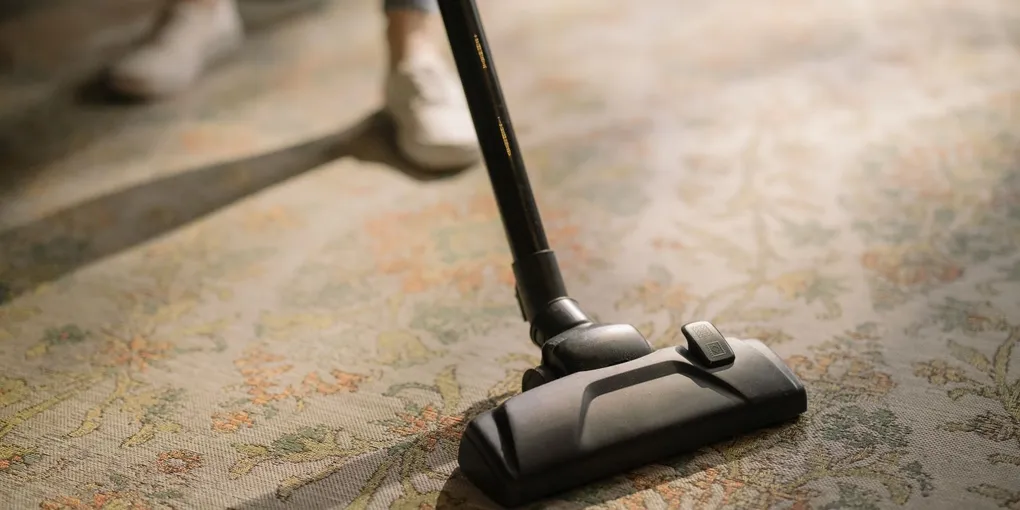
Cleaning carpet: (1) Vacuum first and always — vacuum high-traffic areas 2x/week, others 1x/week. Vacuuming removes abrasive grit that wears carpet faster than dirt. (2) For spot stains — blot immediately, never rub. Club soda or cold water on most stains; dish soap and warm water for grease; enzyme cleaner for pet stains. (3) Deep clean with a machine — rent a carpet cleaner ($30–$50/day) or hire a pro ($25–$60/room). Use hot water extraction (steam cleaning), not dry foam. (4) Deodorize — sprinkle baking soda, let sit 30 minutes, vacuum. Professional cleaning every 12–18 months extends carpet life 5–10 years.
Frequently Asked Questions
How often should I vacuum carpet?
Vacuum high-traffic areas — hallways, living rooms, family rooms — at least twice a week. Bedrooms and low-traffic rooms can go once a week. Homes with pets or allergy sufferers should vacuum high-traffic areas daily or every other day. Regular vacuuming removes abrasive grit that grinds down carpet fibers over time, which is the primary cause of premature carpet wear.
What is the best carpet cleaning machine for homeowners?
The Bissell ProHeat 2X Revolution is the most popular homeowner carpet cleaner — it heats water for better extraction and handles both regular cleaning and stain pretreating. The Hoover PowerDash is a compact, lower-cost option that performs well in smaller homes. If you only need occasional deep cleaning, renting a Rug Doctor or Bissell unit from Home Depot or Lowe's ($35–$50/day) is often the better value. Buy a machine if you have multiple rooms, pets, or plan to clean more than twice a year.
How do I remove pet odors from carpet?
Enzyme cleaners are the only reliable solution for pet odor — they break down the urine proteins that cause the smell. Products like Rocco & Roxie or Nature's Miracle applied liberally and allowed to air dry fully eliminate the odor at the source. Baking soda and fabric sprays mask odor temporarily but do not eliminate it. For heavy urine contamination that has soaked into the pad, professional cleaning with truck-mounted equipment or pad replacement may be needed.
Can I clean carpet myself or do I need a professional?
Most homeowners can handle routine deep cleaning with a rental machine or home carpet cleaner. DIY is appropriate for general maintenance, light soiling, and moderate pet stains. Hire a professional for: carpet that has not been cleaned in 2+ years, heavy pet contamination that has soaked into the pad, large water damage or flooding, pre-sale cleaning, or when DIY results are not satisfactory. Professional cleaning typically runs $120–$250 for a 3-bedroom home.
How do I clean high-traffic carpet areas that look gray?
Gray high-traffic areas are caused by compacted soil and abrasive dirt ground into the fibers. Pretreat with a traffic lane cleaner or a solution of warm water mixed with a tablespoon of dish soap — agitate with a brush, let dwell 5–10 minutes, then clean with a carpet machine using two or more slow passes. Change the water frequently; dirty water redeposited on carpet is a common cause of residual grayness. Follow up by raking the carpet pile with a carpet rake to restore texture.
How long does carpet take to dry after steam cleaning?
Most carpet dries in 6–12 hours after machine cleaning under normal conditions. Speed drying by: opening windows, running ceiling fans or box fans across the carpet, and turning on the HVAC system. Avoid walking on damp carpet with shoes — dirt transfers easily to wet fibers. Professional truck-mounted cleaning typically results in faster drying (4–6 hours) due to stronger extraction. Avoid over-wetting carpet during DIY cleaning — multiple slow machine passes extract more than one fast pass.
How do I remove old, set-in stains from carpet?
Set-in stains require rehydrating the stain before treatment. Dampen the area with warm water, apply a cleaning solution appropriate to the stain type (enzyme cleaner for protein-based stains like blood, urine, and food; dish soap solution for grease and oil; OxiClean carpet cleaner for general stains), and let it dwell for 10-15 minutes. Blot with a clean white cloth — never rub, which spreads the stain. For stains that do not lift, a carpet cleaning machine with hot water extraction often removes what manual blotting can't. Stains that have been chemically treated (pet odor sprays, Febreze) and allowed to dry can permanently bond with carpet fibers — enzyme cleaners applied fresh give the best chance of full removal.
When should I replace carpet instead of cleaning it?
Clean carpet when it looks dirty and has no structural damage. Replace it when: (1) padding has been contaminated by pet urine that has soaked through — cleaning the surface fiber does nothing for the pad, and the odor returns with humidity; (2) mold growth is present — moldy carpet cannot be effectively sanitized and must come out; (3) carpet is matted flat and does not lift even after cleaning and raking — the fibers are permanently crushed or worn; (4) carpet is 15-20 years old — cleaning older carpet can sometimes release debris and reduce air quality rather than improve it. Professional carpet cleaners will sometimes advise replacement on a pre-clean inspection — take that advice seriously.
Cleaning carpet: (1) Vacuum first and always — vacuum high-traffic areas 2x/week, others 1x/week. Vacuuming removes abrasive grit that wears carpet faster than dirt.
Carpet holds onto dirt, allergens, pet dander, and odors in ways hard flooring does not. A consistent cleaning routine — weekly vacuuming, periodic deep cleaning, and prompt spot treatment — extends carpet life significantly and keeps indoor air quality in check.
What You Need
| Item | Use | Link |
|---|---|---|
| Bissell ProHeat Carpet Cleaner | Deep cleaning machine | Shop on Amazon |
| Hoover PowerDash Carpet Cleaner | Compact budget machine | Shop on Amazon |
| Rocco & Roxie Pet Stain & Odor Remover | Enzyme cleaner for pet stains | Shop on Amazon |
| Arm & Hammer Carpet Deodorizer | Powder deodorizer | Shop on Amazon |
| Woolite Carpet Cleaning Formula | Cleaning solution for machines | Shop on Amazon |
| Dyson Animal Vacuum | High-performance vacuum for carpet and pet hair | Shop on Amazon |
Weekly Vacuuming Routine
Vacuuming is the single most impactful thing you can do for carpet longevity. Grit and sand particles act like sandpaper on carpet fibers — the longer they sit, the more damage they do.
Frequency:
- High-traffic areas (entryways, hallways, living rooms): 2–3 times per week
- Bedrooms and low-traffic rooms: once per week
- Pets or allergy sufferers in the home: daily in primary living areas
Technique that matters:
- Vacuum slowly — one forward and one back pass per strip
- Overlap each strip by about half the vacuum’s width
- Use the crevice tool along baseboards where dirt accumulates
- Change vacuum direction occasionally to lift fibers from multiple angles
- Empty the canister or replace the bag before it reaches two-thirds full — suction drops significantly beyond that point
For pet hair, a vacuum with a motorized brush roll (like the Dyson Animal) performs significantly better than basic uprights on carpet.
Deep Cleaning with a Carpet Machine
Deep cleaning removes the embedded dirt that vacuuming cannot reach. Most carpet should be deep cleaned once or twice a year — more often in high-traffic homes or with pets.
Rent or Buy?
| Scenario | Recommendation |
|---|---|
| 1–2 rooms, cleaning once or twice a year | Rent ($35–$50/day at Home Depot or Lowe’s) |
| Multiple rooms, pets, frequent cleaning | Buy (Bissell ProHeat or Hoover PowerDash, $100–$200) |
| Moving out or pre-sale cleaning | Rent a Rug Doctor for maximum power |
Step-by-Step Deep Cleaning
- Clear the room. Move furniture or push it against one wall. Remove area rugs.
- Vacuum first. Always vacuum before machine cleaning — the machine is for deep extraction, not surface dirt pickup.
- Pretreat stains and traffic lanes. Apply a traffic lane pretreatment or the carpet machine’s pretreat solution to heavily soiled areas. Let dwell 5–10 minutes.
- Fill the machine. Use hot water (per machine instructions) and the correct amount of cleaning formula — Woolite or the machine manufacturer’s recommended solution. Do not use regular dish soap; it foams excessively and leaves residue.
- Work backward. Start at the far corner of the room and work toward the doorway so you do not walk on cleaned carpet.
- Make slow, overlapping passes. Move the machine slowly — 2–3 seconds per foot. Overlap each pass by about 2 inches.
- Make dry passes. After cleaning each section, go back over it with the machine in extract-only mode (no water) to pull out as much moisture as possible. This is the step most people skip, and it significantly cuts drying time.
- Rinse pass (optional but recommended). A final pass with plain hot water removes cleaning solution residue that can attract future dirt.
- Dry the room. Open windows, run fans, run the HVAC. Keep foot traffic off until fully dry (6–12 hours).
Dirty water is a signal. If the water tank is filling with dark brown water, the carpet needed this. Change the water whenever it looks too dark to see through — redepositing dirty water is a common cause of carpet looking dingy after DIY cleaning.
Spot Cleaning Fresh Stains
The window for easy stain removal is small — the first 5–10 minutes matter most.
The cardinal rule: blot, never rub. Rubbing spreads the stain and drives it deeper into the fibers.
General fresh stain approach:
- Blot up as much of the spill as possible with clean white cloths or paper towels
- Work from the outside edge of the stain inward to avoid spreading
- Apply cold water to dilute the stain, blot again
- Apply the appropriate cleaner (see below), let dwell, blot
- Rinse with cold water, blot dry
- Place a thick stack of paper towels weighted with a heavy book over the spot for several hours — this wicks residue up from the pad before it can wick back and reappear as a ring
Cleaner by stain type:
| Stain Type | Cleaner |
|---|---|
| Pet urine | Enzyme cleaner (Rocco & Roxie) |
| Coffee, tea, wine | Club soda first; then 1:1 hydrogen peroxide and dish soap on light carpet |
| Grease, oil | Baking soda to absorb, then dish soap |
| Mud | Let dry completely, then vacuum before treating |
| Blood | Cold water only — never hot (heat sets protein stains) |
Removing Pet Odors and Stains
Pet urine is the most common and most persistent carpet problem. Standard carpet cleaners mask the odor temporarily — the smell returns because the urine proteins remain in the fibers and pad.
What works: enzyme cleaners. Products like Rocco & Roxie contain biological enzymes that break down urine proteins, eliminating the odor at the source rather than masking it.
How to use enzyme cleaner correctly:
- Blot fresh urine first — remove as much liquid as possible
- Saturate the stain with enzyme cleaner — use more than you think you need; it must reach as deep as the urine did
- Let it sit for 10–15 minutes (or longer per label instructions)
- Blot — do not rinse yet
- Place weighted paper towels over the area for several hours
- Let air dry fully — the enzymes continue working as the carpet dries
Finding old stains: A UV/black light (under $15) reveals dried urine stains that are invisible in normal light. Treat each spot found before machine cleaning.
When enzyme cleaner is not enough: If urine has soaked through the carpet into the pad — which happens with repeated accidents in the same spot — the pad needs to be replaced or treated from underneath. Professional cleaning with truck-mounted equipment can sometimes extract deeply embedded urine, but pad replacement is the most reliable fix for severe cases.
Deodorizing Carpet
Carpet absorbs cooking smells, pet odors, and general household odors over time. Regular deodorizing keeps the carpet smelling fresh between deep cleanings.
Baking Soda Method
Baking soda neutralizes odors rather than masking them.
- Vacuum the carpet first
- Sprinkle Arm & Hammer Carpet Deodorizer (or plain baking soda) lightly and evenly across the carpet
- Let it sit for at least 15–30 minutes — longer for stronger odors (up to several hours)
- Vacuum thoroughly
Avoid over-applying — heavy powder buildup can clog vacuum filters and leave residue in the carpet pile.
Enzyme Cleaners for Odor
For odors from biological sources (pet urine, vomit, spilled milk), baking soda masks the smell temporarily. Enzyme cleaners eliminate it. Apply enzyme cleaner to odor-producing spots, let it dwell, and allow to air dry fully.
What Not to Use
Fabric sprays (Febreze and similar products) mask odor and provide a short-term result but do not clean the carpet. They are useful for freshening between cleanings but are not a substitute for actual treatment.
When to Hire a Professional
DIY cleaning handles most routine carpet maintenance. These situations call for a professional:
- Carpet not cleaned in 2+ years — embedded soil is difficult to extract without truck-mounted equipment
- Heavy or repeated pet accidents — urine that has soaked into the pad typically needs professional extraction or pad replacement
- Water damage or flooding — requires rapid professional extraction and drying to prevent mold
- Pre-sale or move-out cleaning — professional results and, often, a certification that can be useful for landlord disputes
- Persistent odor after DIY cleaning — a sign the source is in the pad or subfloor, not just the carpet surface
What professional cleaning costs: Expect $120–$250 for a 3-bedroom home with steam cleaning. Prices vary by region, room count, and condition. Get at least two quotes. Look for IICRC-certified technicians for better consistency.
Professional cleaning does not make carpet last forever — if the fibers are worn flat from traffic or the backing is damaged, cleaning will not restore appearance. At that point, replacement is the right call.
Related Reading
- How to Remove Carpet Stains — stain-specific treatments for pet urine, wine, coffee, and grease
- How to Remove Carpet — DIY carpet removal when it is time to replace
- How to Install Vinyl Plank Flooring — replacing carpet with low-maintenance hard flooring
- Carpet Installation Cost — what new carpet costs and how to budget for replacement
- Weekly Vacuuming Routine
Vacuuming is the single most impactful thing you can do for carpet longevity. Grit and sand particles act like sandpaper on carpet fibers — the longer they sit, the more damage they do.
- Deep Cleaning with a Carpet Machine
Deep cleaning removes the embedded dirt that vacuuming cannot reach. Most carpet should be deep cleaned once or twice a year — more often in high-traffic homes or with pets.
- Spot Cleaning Fresh Stains
The window for easy stain removal is small — the first 5–10 minutes matter most.
- Removing Pet Odors and Stains
Pet urine is the most common and most persistent carpet problem. Standard carpet cleaners mask the odor temporarily — the smell returns because the urine proteins remain in the fibers and pad.
- Deodorizing Carpet
Carpet absorbs cooking smells, pet odors, and general household odors over time. Regular deodorizing keeps the carpet smelling fresh between deep cleanings.
Free: 10-Point Home Maintenance Checklist
Prevent costly repairs with this seasonal checklist. Save hundreds every year by catching problems early.
Your checklist is ready!
Open Checklist →Something went wrong. View the checklist here.